

Running a business in New Orleans means managing a lot of variables that business owners in cooler climates never think about. The heat index regularly hits 105 degrees Fahrenheit in July and August. Humidity stays above 70 percent for most of the year. And your building’s HVAC system carries a workload that would wear out equipment in a fraction of the time compared to, say, a restaurant in Chicago. Big Easy AC Heating works with commercial properties across greater New Orleans, from restaurants in the French Quarter to office buildings in Metairie, and this guide covers everything a business owner needs to understand before making decisions about their commercial HVAC system.
Why Commercial HVAC in New Orleans Is a Different Animal
The NOLA climate is not forgiving to mechanical equipment. Most cities with hot summers get a break in fall and winter. New Orleans gets a 10 to 12 month cooling season. That means your commercial equipment runs almost year-round rather than seasonally, which accelerates wear on compressors, capacitors, fan motors, belts, and refrigerant lines in ways that standard manufacturer life expectancy charts don’t account for.
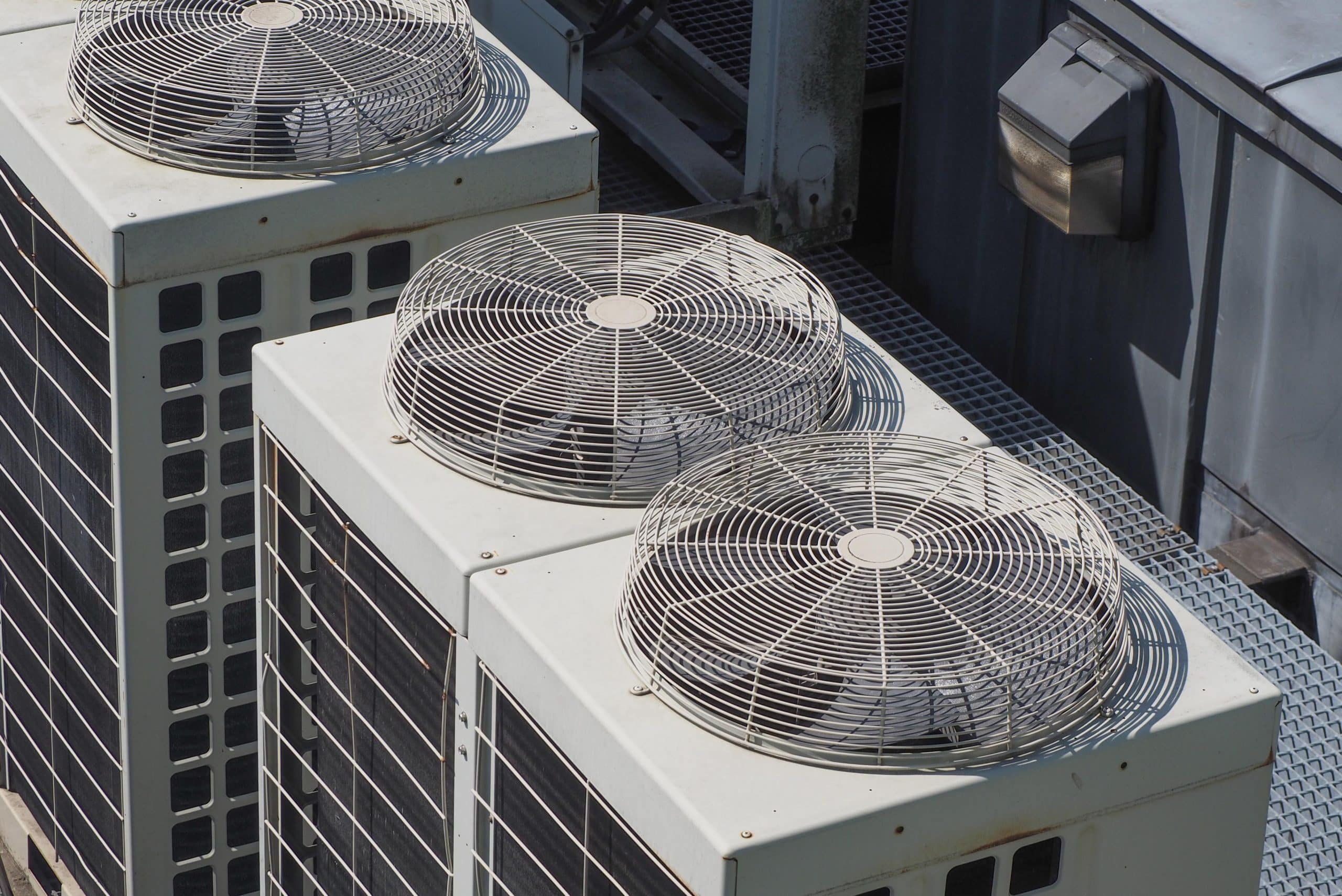
Rooftop package units are the dominant commercial HVAC configuration in this city. The economics make sense for flat-roof commercial buildings, the footprint keeps equipment off the main floor, and they’re serviceable without disrupting interior operations. But rooftop installation in New Orleans comes with a specific problem: roof surface temperatures regularly hit 140 degrees Fahrenheit during summer afternoons. That ambient heat load forces compressors to work harder, shortens refrigerant cycle efficiency, and can cause high-pressure lockouts during peak demand hours on the hottest days. Businesses that run rooftop units need to account for this in their maintenance schedules and replacement timelines.
Humidity is the other factor that sets NOLA commercial HVAC apart. Cooling a space in a dry climate is primarily a temperature problem. Cooling a space in New Orleans is a latent heat problem. Your system has to remove moisture from the air as well as lower the temperature. Systems that are oversized for the space will cool quickly but short-cycle, which means they shut off before completing a full dehumidification pass. The result is a room that feels cold and clammy rather than comfortable. This is a common complaint from guests in hotels and diners in restaurants, and it almost always traces back to improper equipment sizing at installation.
The Business Sectors That Face the Highest HVAC Demands in New Orleans
Restaurants: French Quarter, Magazine Street, and the Warehouse District
Restaurant HVAC is among the most technically demanding commercial work there is, and New Orleans restaurants add a layer of complexity on top of the baseline challenges. Any commercial kitchen operating hoods creates a negative pressure situation in the kitchen. Exhaust fans pull air out. That air has to be replaced somehow. The system that supplies that replacement air is called a makeup air unit, and balancing hood exhaust against makeup air supply is one of the most common points of failure in restaurant HVAC installations.
When makeup air is not properly balanced with exhaust, you get back-drafting at the hood, spillage of cooking vapors into the dining room, and doors that are either impossible to open or that slam shut on their own due to pressure differentials. The Louisiana Office of Public Health includes ventilation system performance in health code inspections for food service establishments. A hood that is not drawing properly or a kitchen that is running at significant negative pressure relative to dining areas is a flag that can result in a failed inspection.
Grease-laden air is the other restaurant-specific issue. Cooking vapors carry grease particles that coat the interior of ductwork, coils, and air handling components. In a restaurant that operates long kitchen hours, a maintenance schedule that works fine for an office building will leave your commercial HVAC equipment running through grease buildup that degrades heat transfer efficiency and creates a fire risk inside the duct system. Restaurant operators in the French Quarter and Magazine Street corridor need more frequent coil cleaning, duct inspection, and filter changes than any other commercial category.
Hotels in the CBD and Warehouse District
Hotel HVAC has a direct line to guest reviews, and in New Orleans, where hospitality is central to the local economy, that connection is not abstract. A hotel room that does not get cold enough, or that cycles on and off through the night with loud compressor starts, generates negative reviews that cost future bookings. The two primary configurations for hotel guest rooms are PTAC units (packaged terminal air conditioners, the through-wall units common in older hotel stock) and central hydronic systems with fan coil units in each room.
PTAC units are serviceable and inexpensive to replace on a room-by-room basis, but they have real limitations in extreme heat. At 100 degrees Fahrenheit outside with high humidity, a PTAC unit in a sun-exposed room may not be able to maintain the 68 to 70 degree set point that most guests expect. This is particularly true for older PTAC units running R-22 refrigerant, which has been phased out under EPA regulations and is now prohibitively expensive to recharge. Hotels still running R-22 PTAC equipment are facing a capital decision, not just a maintenance issue.
Central hydronic systems in larger CBD properties require a different kind of management. Chiller efficiency, cooling tower maintenance, water treatment to prevent Legionella growth, and AHU performance all need to be tracked on coordinated schedules. The good news is that properly maintained central systems tend to outperform PTAC equipment in extreme heat because they have the thermal capacity to handle large simultaneous loads without individual unit overload.
Office Buildings: Zoning, IAQ, and Post-Pandemic Expectations
Office HVAC in New Orleans deals with a zoning problem that has gotten more complicated in recent years. Open floor plan offices became popular in the 2010s, which created large open zones that a single air handler could condition reasonably well. The shift toward hybrid work, hot-desking, and flexible private office configurations means that many office buildings now have spaces that are partially occupied in irregular patterns. A system designed to condition a floor with 40 people at every desk every day does not perform well when 8 people are scattered across the same floor on a Tuesday.
Variable air volume (VAV) systems address this better than constant volume systems because they modulate airflow to zones based on demand rather than running at a fixed output. Buildings that are still running older constant volume systems, or that are trying to use a single-zone rooftop unit to condition a highly variable space, often end up with hot spots, cold spots, and occupant complaints that are impossible to resolve without a system redesign.
Indoor air quality became a front-of-mind issue for office tenants after 2020. Many tenants now ask specifically about MERV filtration ratings, outside air percentages, and whether systems meet ASHRAE Standard 62.1 ventilation requirements. ASHRAE 62.1 sets minimum ventilation rates by occupancy type and square footage. Buildings that were grandfathered on older ventilation standards may find it harder to attract and retain tenants who are asking the right questions about the air they’re breathing at work.
Retail and Medical: Different Loads, Different Requirements
Retail spaces along Magazine Street, in the CBD, and in Metairie business corridors have HVAC loads that swing dramatically based on occupancy, door traffic, and lighting heat loads. A clothing boutique with minimal occupancy has a very different load profile than a packed restaurant on the same block. Retail HVAC has to handle the high infiltration load from frequent door openings in summer, which brings humid outdoor air directly into the conditioned space and forces the system to work overtime on dehumidification.
Medical offices and clinics face the most rigorous requirements of any commercial category. Exam rooms, procedure rooms, and waiting areas each have different ventilation, temperature, and humidity specifications under ASHRAE 170 (ventilation for health care facilities). Medical HVAC work requires contractors who understand not just comfort conditioning but infection control through proper pressure relationships between spaces, filtration to MERV-13 or HEPA standards in certain zones, and humidity control within specific ranges to prevent the growth of mold and pathogens.
Older Buildings and Non-Standard Ductwork
New Orleans has a substantial inventory of pre-1970 commercial buildings, and many properties in the French Quarter, Uptown, Mid-City, and older Metairie corridors were never designed with central ductwork in mind. These buildings were built before widespread air conditioning adoption and often have structural limitations that make standard duct routing impossible or prohibitively expensive.
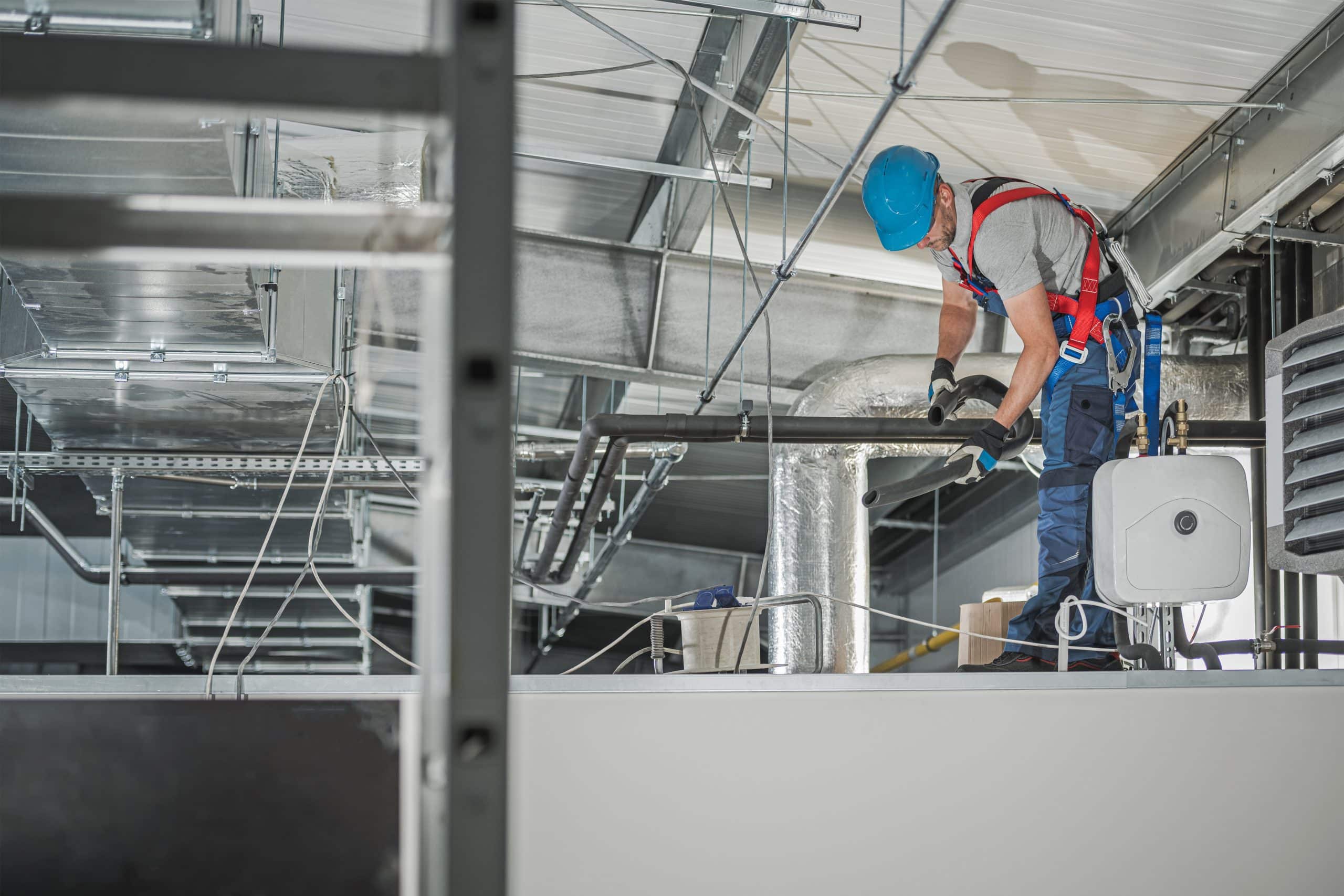
Ductless mini-split systems have become a practical solution for these properties. Multi-zone mini-split systems allow individual room control without requiring duct installation, and modern inverter-driven units from manufacturers like Daikin, Mitsubishi, and Carrier operate at efficiencies that can meet or exceed SEER2 ratings required for new equipment in the South climate region (the federal minimum is 15 SEER2 for split systems in the South, which took effect January 2023).
For buildings that have existing ductwork from an era when insulation standards were minimal, duct leakage is often a significant efficiency loss. A duct system leaking 25 to 30 percent of conditioned air into unconditioned ceiling or wall cavities is not an unusual finding in older New Orleans commercial buildings. Before replacing equipment, a thorough duct integrity assessment can identify whether equipment replacement alone will deliver the expected efficiency improvements, or whether the distribution system needs to be addressed first.
Preventive Maintenance Contracts: The Business Case
The math on commercial HVAC preventive maintenance is straightforward when you look at it honestly. Emergency after-hours service calls in New Orleans during the summer carry premium rates because demand exceeds available technician capacity on the hottest days of the year. The same repair that costs a standard rate in March costs significantly more at 2 a.m. on a Saturday in July when your restaurant’s walk-in coolers and dining room systems both go down on a full-house night.
A structured maintenance agreement covers the inspections and adjustments that prevent the most common failure modes. For commercial rooftop units, the standard maintenance tasks include checking refrigerant charge and pressures, cleaning condenser and evaporator coils, inspecting and replacing belts and bearings, verifying electrical connections, testing capacitors and contactors, checking economizer operation, and confirming proper drain pan and condensate drainage. Each of these items left unaddressed is a potential emergency call.
Coil cleaning is worth specific mention for New Orleans commercial properties. Salt air from proximity to Lake Pontchartrain, the Gulf, and the river corrodes aluminum fins on condenser coils faster than inland locations. Fin corrosion reduces heat transfer efficiency, which forces the compressor to work harder, which shortens compressor life. A condenser coil that has not been cleaned and inspected for a couple of seasons in coastal Louisiana is not performing at anything close to its rated capacity.
Beyond the avoided emergency costs, preventive maintenance extends equipment life. A rooftop unit that receives no maintenance in New Orleans might last 10 to 12 years. The same unit on a regular maintenance program with timely minor repairs can realistically reach 15 to 18 years. On commercial equipment with a replacement cost of $15,000 to $50,000 per unit depending on tonnage, the math favors maintenance contracts decisively.
Licensing Requirements for Commercial HVAC Contractors in Louisiana
Louisiana requires commercial HVAC contractors to hold a license through the Louisiana State Licensing Board for Contractors (LSLBC). This is not optional and not the same as a residential HVAC certificate. Commercial HVAC work falls under the mechanical contractor classification, which requires applicants to pass a trade examination, demonstrate financial stability, carry appropriate insurance, and maintain continuing education requirements.
The practical reason this matters to business owners is liability and permit compliance. Commercial HVAC installations and major replacements require permits in Orleans Parish and Jefferson Parish. A permit pulled by an unlicensed contractor, or work done without a permit, creates problems at inspection, can void manufacturer warranties, and creates liability exposure if equipment failure leads to property damage, health incidents, or insurance claims. Always verify that your commercial HVAC contractor holds a current, active LSLBC mechanical contractor license before signing a service agreement.
Technicians working on systems with more than 5 pounds of refrigerant are required to hold EPA Section 608 certification. This is a federal requirement, not a state one, and it applies regardless of refrigerant type. EPA 608 certifies that technicians understand safe refrigerant handling, recovery, and reclaim procedures. With the refrigerant transition underway (R-410A systems are no longer being manufactured in the U.S. as of January 2025, with the industry moving toward R-32 and R-454B as lower global warming potential alternatives), proper certifications and refrigerant handling knowledge become more important, not less.
Energy Incentives for New Orleans Commercial Properties
Entergy New Orleans Commercial Rebates
Entergy New Orleans runs commercial energy efficiency programs that include rebates for qualifying HVAC equipment upgrades. Commercial customers replacing older, less efficient equipment with high-efficiency units may qualify for rebates based on the efficiency improvement and system size. The specific rebate amounts and qualifying equipment lists update periodically, so confirming current availability directly with Entergy New Orleans before purchasing equipment is advisable. The general categories that qualify include high-efficiency rooftop units, variable frequency drives on fans and pumps, building automation system upgrades, and lighting retrofits that reduce internal heat loads.
Section 179D Tax Deduction
The IRA (Inflation Reduction Act) expanded and extended Section 179D of the tax code, which provides a deduction for energy-efficient commercial building improvements including HVAC systems. The base deduction is $0.54 to $1.07 per square foot for systems placed in service in 2023 and after, scaling based on the percentage of energy cost reduction achieved compared to ASHRAE Standard 90.1 baseline. Projects that meet prevailing wage and registered apprenticeship requirements qualify for a much higher rate, up to approximately five times the base deduction amount.
For a business owner doing a 10,000 square foot commercial HVAC replacement that qualifies at the base rate, the deduction could be $5,400 to $10,700 in the first year. Projects that qualify for the enhanced rate could see deductions of $27,000 to $53,000 on the same project. This is not a tax credit (which reduces tax owed dollar for dollar) but a deduction (which reduces taxable income), so the actual tax benefit depends on your effective tax rate. A CPA familiar with commercial real estate and energy tax incentives can calculate the specific benefit for your situation.
The deduction requires a Qualified Individual (a licensed engineer or contractor, not the building owner) to certify that the installed property meets the energy reduction thresholds. This certification has to be attached to the tax filing. It is an extra step, but on a significant commercial HVAC project, the tax savings are large enough that the certification cost is easily justified.
Understanding Equipment Sizing: Manual J and Why It Matters
Manual J is the ACCA (Air Conditioning Contractors of America) standard for residential and light commercial load calculations. For commercial properties, the equivalent is a proper heat gain and heat loss calculation that accounts for the specific building envelope, occupancy, internal equipment loads, lighting, solar exposure, and local climate data. New Orleans’s climate data (ASHRAE Design Conditions) reflects the extreme heat and humidity that make load calculations here different from most of the country.
Improper sizing is one of the most common mistakes in commercial HVAC, and it is not always intentional. A contractor who sizes equipment based on rule-of-thumb square footage estimates rather than actual load calculations may install a system that is 20 to 30 percent oversized. That sounds like more capacity is better, but oversized cooling equipment short-cycles, which means it cools the space rapidly without running long enough to remove latent moisture from the air. The space feels clammy. Humidity stays high. Occupant comfort suffers. And the equipment cycles on and off more frequently, which is harder on compressors than sustained run time.
For restaurant owners especially, proper sizing has to account for the massive internal heat loads from cooking equipment, the exhaust and makeup air system, and the high occupancy load during service hours. The kitchen heat gain alone can change the cooling load calculation substantially compared to what the square footage would suggest.
Serving New Orleans and Surrounding Areas
Big Easy AC Heating handles commercial HVAC work throughout the greater New Orleans region. The service area covers New Orleans proper including the CBD, French Quarter, Warehouse District, Uptown, and Mid-City, as well as Metairie, Kenner, Harahan, River Ridge, Gretna, and Westwego on the West Bank, plus the northshore communities of Slidell, Covington, and Mandeville.
Commercial service calls in the immediate metro are typically faster than outlying areas, but the company maintains technicians familiar with the building stock and permitting requirements across all of Jefferson, Orleans, St. Tammany, and St. Bernard parishes. Commercial HVAC permitting requirements vary by parish, and a contractor who only operates in one jurisdiction may not be current on the permit and inspection requirements in another.
What to Ask Before Signing a Commercial HVAC Contract
Before committing to any commercial HVAC contractor in the New Orleans area, these are the questions worth asking explicitly:
Is the company licensed by the LSLBC for commercial mechanical work, and what is the license number? A legitimate contractor will provide this without hesitation. You can verify active license status directly on the LSLBC website.
Do the technicians hold current EPA Section 608 certification? This is required by federal law for anyone handling refrigerants in systems over 5 pounds. In the context of the ongoing refrigerant transition, ask specifically whether technicians are trained on R-32 and R-454B handling in addition to R-410A.
Will the equipment sizing be based on a load calculation or a square footage estimate? For any new installation or major replacement, insist on a documented load calculation. This protects you from the short-cycling and humidity problems that come with oversized equipment.
What does the maintenance agreement include, and what is the response time guarantee for emergency calls? Emergency response time matters more in summer than any other time of year. A contractor who cannot commit to same-day emergency response during peak season is not the right fit for a restaurant or hotel that cannot afford hours of downtime.
Will you pull permits for the installation? Any contractor who suggests skipping permits to save time or money is creating a liability problem for your business, not a convenience. Permit the work.
Frequently Asked Questions
How often should a commercial HVAC system be serviced in New Orleans?
Most commercial properties in New Orleans should schedule preventive maintenance at minimum twice per year: once before the cooling season begins (March or April) and once at the start of winter (October or November). High-demand properties like restaurants and hotels with continuous operation typically benefit from quarterly service visits. Given the near-year-round cooling demand and the accelerated wear from heat, humidity, and salt air, annual servicing is not enough for most commercial applications in this climate.
What is the average lifespan of a commercial rooftop HVAC unit in New Orleans?
Under typical New Orleans conditions, commercial rooftop package units average 12 to 15 years with regular maintenance. Without maintenance, expect 8 to 12 years. Roof surface temperatures regularly reaching 140 degrees Fahrenheit and continuous summer demand accelerate wear compared to national averages, which are often cited at 15 to 20 years. If your unit is approaching the 12-year mark and starting to need more frequent repairs, a replacement cost-benefit analysis makes sense rather than continuing to invest in aging equipment.
Do New Orleans restaurants need a separate makeup air system?
Yes, in almost every case. Commercial kitchen exhaust hoods create significant negative pressure that must be offset by a controlled supply of makeup air. Without a dedicated makeup air unit, the building draws replacement air through every gap it can find, including through doors, which creates pressure differential problems and pulls unconditioned, unfiltered air into the kitchen. Louisiana health code inspections for food service establishments include ventilation performance as a compliance item. An HVAC contractor with restaurant experience can assess whether your current makeup air system is balanced with your hood exhaust and whether it complies with current code.
Does Big Easy AC Heating handle commercial HVAC permits in Orleans Parish and Jefferson Parish?
Yes. All commercial installations and major equipment replacements require permits, and the permitting requirements differ between Orleans Parish and Jefferson Parish. Big Easy AC Heating pulls the required permits as part of the installation process. Work that is not permitted creates problems at property sale, insurance claims, and inspection. Never let a contractor skip the permit step on commercial HVAC work in Louisiana.
What is the Section 179D deduction and can my business claim it?
Section 179D is a federal tax deduction for energy-efficient improvements to commercial buildings, including HVAC systems. The base deduction runs from $0.54 to $1.07 per square foot for systems installed in 2023 and after, with a significantly higher rate available for projects meeting prevailing wage and registered apprenticeship requirements. To claim the deduction, a Qualified Individual must certify that the installed system meets the energy reduction threshold compared to ASHRAE Standard 90.1 baseline. If you are planning a commercial HVAC replacement or significant upgrade, discuss Section 179D with your CPA before the project begins so the certification can be arranged properly.
How do I know if my commercial HVAC system is the right size for my building?
The clearest sign of an oversized system is a space that cools quickly but feels humid and clammy rather than comfortable. An undersized system runs continuously without reaching the set point on the hottest days. Proper sizing requires a load calculation based on your building’s actual heat gain and loss, accounting for the building envelope, occupancy, internal equipment loads, and New Orleans climate data. If your current system was sized by square footage estimate rather than a documented load calculation, or if you are experiencing comfort complaints that cannot be resolved by thermostat adjustment, a load calculation review is the right starting point.
Can mini-split systems work for older commercial buildings without ductwork in New Orleans?
Yes, and they are often the best practical option for pre-1970 commercial buildings in New Orleans where structural constraints make duct installation impractical or cost-prohibitive. Multi-zone ductless mini-split systems allow room-by-room control, avoid the energy losses associated with duct leakage in older buildings, and can achieve SEER2 ratings that qualify for Entergy New Orleans rebates and Section 179D deductions. The limitation is that they require wall penetrations for refrigerant lines and do not provide the fresh air ventilation that a ducted system with an outside air component provides. In buildings with IAQ requirements (medical offices, for instance), supplemental ventilation may need to be addressed alongside the mini-split installation.
Talk to a Licensed Commercial HVAC Contractor in New Orleans
Whether you operate a restaurant in the French Quarter, a hotel in the CBD, an office building in Metairie, or a medical clinic in Kenner, the right commercial HVAC partner makes a measurable difference in operating costs, equipment longevity, and occupant comfort. Big Easy AC Heating serves commercial clients across greater New Orleans with licensed technicians, documented load calculations, and maintenance programs built for the Louisiana climate. Call 504-608-4636 to discuss your commercial HVAC needs, schedule a system assessment, or get a maintenance contract quote.