

New Orleans is not like the rest of the country when it comes to air conditioning. A system that would last 15 or 20 years in Chicago or Denver wears out faster here, and for good reason. If you have been wondering whether your unit is due for replacement, Big Easy AC Heating has been answering that question for homeowners across the metro for years. This guide walks through the real signs it’s time to replace, what to budget, which incentives apply in Louisiana right now, and why the process matters more than just picking a new unit.
Why NOLA Systems Age Faster Than the National Average
HVAC industry data puts the average central air conditioner lifespan at 15 to 20 years in mild-to-moderate climates. That standard does not apply here. In New Orleans, air conditioners run 10 to 12 months out of the year. Compare that to a northern city where the cooling season might last 4 to 5 months. A 10-year-old unit in New Orleans has logged the same operating hours as a 20-year-old unit in a place like Minneapolis.
The humidity compounds the wear. New Orleans air sits at 70 to 80 percent relative humidity for most of the year. That moisture works constantly against the evaporator coil, the drainage components, the electrical contacts, and the refrigerant lines. Corrosion moves faster. Biological growth in drain pans and coil fins is a regular maintenance item, not an occasional one. The combination of long run times and perpetual humidity is why a 12-year-old system in Lakeview or Gentilly deserves the same scrutiny most homeowners elsewhere give a 20-year-old unit.
Post-Katrina reconstruction added another layer of complexity. A large share of the housing stock in New Orleans East, Lakeview, and Gentilly was rebuilt between 2006 and 2008. Those systems are now 18 to 20 years old by any measure. Many of them are still running, but running does not mean efficient or reliable. If your home was rebuilt after the storm and you have never replaced the original HVAC system, that unit has been working harder than almost any other residential system in the country for nearly two decades. If you are not sure yet, these signs your AC is working too hard can help you decide what comes next.
The Numbers That Tell You to Replace, Not Repair
The repair vs. replace decision does not have to be guesswork. The industry uses a straightforward calculation: multiply the repair estimate by the age of the system in years. If that number exceeds $5,000, replacement is the better financial decision in most cases.
Here is how it plays out in practice. A 10-year-old system with a failed compressor that costs $1,800 to repair: 10 times $1,800 equals $18,000, well over the threshold. The math points clearly to replacement. A 3-year-old system with the same $1,800 compressor repair: 3 times $1,800 equals $5,400, borderline but not as clear-cut, and the age of the unit changes the picture significantly.
Beyond the formula, watch for these patterns:
- Repair bills in consecutive years, even for different components
- Entergy bills that have climbed 20 to 30 percent without a change in usage habits
- Rooms that were comfortable five years ago and now run significantly hotter or more humid
- The system running almost continuously without reaching the thermostat setpoint
- Refrigerant leaks, especially on systems using R-22 (phased out since 2020)
Refrigerant type is a factor that catches a lot of homeowners off guard. Systems manufactured before 2010 used R-22, which the EPA phased out of production. What’s left in the supply chain is expensive and getting more so. A system that develops a refrigerant leak and still uses R-22 is not just facing a repair cost, it’s facing a cost that will only increase as R-22 supply tightens further. R-410A, which replaced R-22, is now itself being phased down under EPA regulations. New systems use R-32 or R-454B. If your existing unit uses either R-22 or R-410A and is already aging, the refrigerant situation is one more reason to plan the transition now rather than after an emergency failure in July.
Please note: The prices in this article are estimates only, shared to help you plan. Your actual cost depends on your property, the materials and the size of the job. For pricing on your project, call Big Easy AC Heating at (504) 608-4636 for a quote.
What SEER2 Actually Means for Your Entergy Bill
Efficiency ratings for new systems are now expressed in SEER2, a revised standard that replaced the older SEER rating system in 2023. SEER2 uses a more realistic test protocol, so a 15 SEER2 unit is not directly equivalent to a 15 SEER unit under the old standard. The practical takeaway: the minimum efficiency for new systems sold in the South is 15 SEER2 for split systems. Many units sold in this market range from 15 to 20 SEER2, with the higher-efficiency models carrying a premium upfront but recovering that cost through lower utility bills.
The savings are meaningful in New Orleans specifically because the cooling season is so long. Replacing a 10 SEER system, common in early-2000s installations, with a 15 SEER2 unit cuts cooling energy consumption by more than 33 percent. On a 1,600 square foot shotgun double or raised ranch in Metairie or River Ridge, that can translate to $60 to $100 per month off the Entergy bill during peak summer months. Over a 15-year system lifespan, the cumulative savings are substantial.
Higher efficiency also means less run time to hit your setpoint. Less run time reduces wear, which extends the life of the new system. The compressor cycles less. The blower motor runs less. Maintenance intervals stay cleaner. In a climate like New Orleans, a more efficient system is not just about the bill, it is about buying the equipment a fighting chance against the conditions it faces every single day.
Entergy Rebates and the Expired Federal Tax Credit
The IRS says the Energy Efficient Home Improvement Credit (25C) covers only improvements made through December 31, 2025, so a central air conditioner or heat pump installed after that date does not qualify for it. If you are on the fence between a straight AC replacement and a dual-function system, compare the equipment price, the efficiency rating and how you heat your home.
If you installed qualifying equipment in 2025 or earlier, consult a tax professional about claiming the credit for that year, and keep the equipment purchase and installation invoices along with the manufacturer’s certification statement for the qualifying efficiency rating.
Entergy New Orleans offers rebate programs for qualifying high-efficiency systems. Program details and rebate amounts are updated periodically, so confirm current availability with your contractor or directly through Entergy’s rebate portal before committing to a specific unit. A licensed HVAC contractor familiar with the local market will know which current system models qualify and can help you document the installation properly for any utility rebate.
Sizing Matters More Than Most Homeowners Know
The single most common installation error in the residential HVAC market is improper sizing. Contractors without proper training sometimes use a simple rule of thumb, such as one ton of cooling per 500 square feet. That method ignores almost every variable that actually determines how much cooling capacity a home needs.
The correct approach is a Manual J load calculation. Manual J is an industry-standard method developed by ACCA (Air Conditioning Contractors of America) that accounts for square footage, ceiling height, insulation values, window area and orientation, local climate data, duct configuration, and internal heat loads from occupants and appliances. In New Orleans, with its combination of extreme heat, high humidity, and a wide variety of housing stock, including shotgun doubles, raised ranches, slab-on-grade brick homes, and post-Katrina elevated construction, a proper Manual J is not optional.
An oversized system cools the air temperature down quickly but does not run long enough to remove humidity effectively. The result is a home that feels cool but clammy, with indoor humidity that stays well above the comfortable range of 45 to 55 percent. Oversizing also causes short cycling, where the system kicks on, reaches setpoint quickly, and shuts off before the equipment has warmed up properly. Short cycling accelerates wear on the compressor and reduces system life.
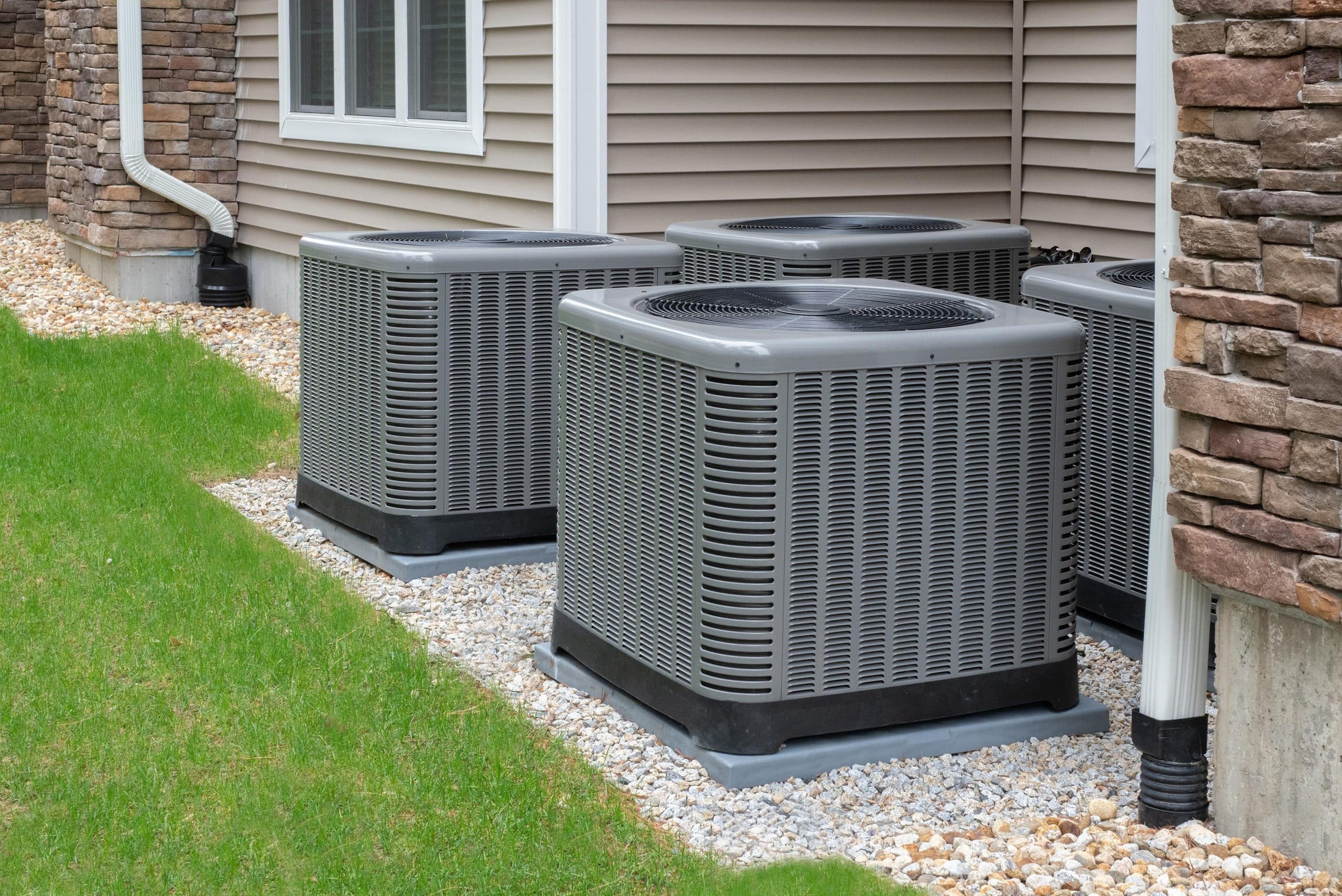
An undersized system runs constantly and never quite reaches setpoint on the hottest days. It works harder than it should from day one, and the run time burns through components faster. Neither scenario is acceptable when you are making a purchase that is expected to last 15 years in New Orleans conditions.
Any licensed HVAC contractor doing a legitimate replacement in New Orleans should be pulling a permit with the City of New Orleans and performing a load calculation. If a contractor quotes you a price without asking about your ductwork, ceiling heights, insulation, and window configuration, that is a red flag. The permit requirement is not just bureaucratic procedure. It means an inspector will verify the installation before it’s closed out, which protects you as the homeowner.
Licensing Requirements in Louisiana
Louisiana requires HVAC contractors to hold a state contractor’s license through the Louisiana State Licensing Board for Contractors (LSLBC). For residential HVAC work, this means a current LSLBC license with the appropriate classification. The license requirement exists to protect homeowners from unqualified installations that can fail early, void manufacturer warranties, or create safety hazards related to refrigerant handling and electrical connections.
Before signing any replacement contract, ask for the contractor’s LSLBC license number and verify it on the LSLBC public lookup. A legitimate contractor will have no hesitation providing this. Also confirm that the company carries general liability insurance and workers’ compensation coverage. In New Orleans, where storm damage and contractor fraud have both been ongoing issues since Katrina, verifying credentials before any work begins is simply standard practice for protecting your investment.
The City of New Orleans requires a permit for HVAC replacement. In Jefferson Parish, which covers Metairie, Kenner, Harahan, and River Ridge, permit requirements apply as well. Work done without a permit can create problems when you sell the home, with your homeowner’s insurance, and with the manufacturer’s warranty on the new equipment. A contractor who suggests skipping the permit to save time or money is not acting in your interest.
Choosing Between a Straight AC Replacement and a Heat Pump
Most New Orleans homeowners replacing a conventional central AC system are weighing two paths: replace it with a similar system using a gas or electric furnace for heating, or switch to a heat pump that handles both cooling and heating from a single outdoor unit.
Heat pumps work by moving heat rather than generating it, which makes them highly efficient for heating in mild climates. New Orleans winters are mild, with temperatures rarely dropping below freezing for more than a day or two. This is exactly the climate where heat pumps perform at their best. Cold-climate heat pumps, which maintain efficiency down to 5 degrees Fahrenheit, are now available and represent the highest efficiency option, but in a New Orleans winter, even a standard heat pump handles the season easily.
When you factor in that you are replacing both the cooling and heating system in one installation, the total cost comparison to a conventional split system often tips toward the heat pump over a 10 to 15-year window.
Duct condition matters for either choice. If the existing duct system has significant leakage, crimps, or undersized runs, a new system installed on bad ducts will never perform to its rated efficiency. A reputable contractor will assess duct condition as part of the replacement process and quote duct repairs or sealing separately if needed. In homes built before 1990, and in many post-Katrina rebuilds where speed of construction sometimes compromised duct quality, this is worth discussing before the new system goes in.
Neighborhoods and Housing Types: What to Expect
New Orleans and the surrounding metro includes housing stock that spans over a century of construction styles, each presenting different replacement considerations.
Shotgun houses and camelbacks in Uptown, Mid-City, and the Seventh Ward often have limited attic access and older duct configurations that require careful evaluation. Many of these homes were built before central air conditioning existed and retrofitted with systems that were not originally designed for the structure. A replacement on one of these homes requires particular attention to duct routing and equipment placement.
Slab-on-grade construction in Metairie and parts of Kenner typically runs ducts through attic spaces, which in a NOLA summer can reach 140 to 160 degrees Fahrenheit. Properly insulated and sealed attic ductwork is essential in these homes. Systems with variable-speed air handlers manage temperature and humidity more effectively when ducts are running through extreme heat.
Post-Katrina elevated construction in Lakeview, Gentilly, and New Orleans East introduced a variety of mechanical configurations. Some homes have equipment in conditioned utility closets, some in unconditioned elevated crawl spaces, and some with attic-based systems. Each setup has different efficiency and maintenance implications.
In Slidell, Covington, and Mandeville, homes tend to be newer on average, but the proximity to the lake and the high water table in parts of St. Tammany Parish create their own humidity management challenges. Systems that provide strong dehumidification, either through variable-speed equipment or through an add-on whole-home dehumidifier, are worth discussing for these areas.
Across Gretna and Westwego on the West Bank, the housing mix includes older brick ranch homes and newer developments. The older brick construction tends to hold heat and humidity well, which means proper sizing and a dehumidification-capable system make a noticeable difference in comfort.
What the Replacement Process Looks Like
A professional air conditioning replacement in New Orleans typically follows this sequence:
First, a site visit and assessment. The contractor inspects the existing system, measures the home, evaluates ductwork condition, checks electrical service capacity, and gathers the information needed for a Manual J load calculation. This visit should not be rushed. A contractor who shows up, looks at the unit for five minutes, and immediately quotes a price without measuring the home or checking the ducts has skipped the most important part.
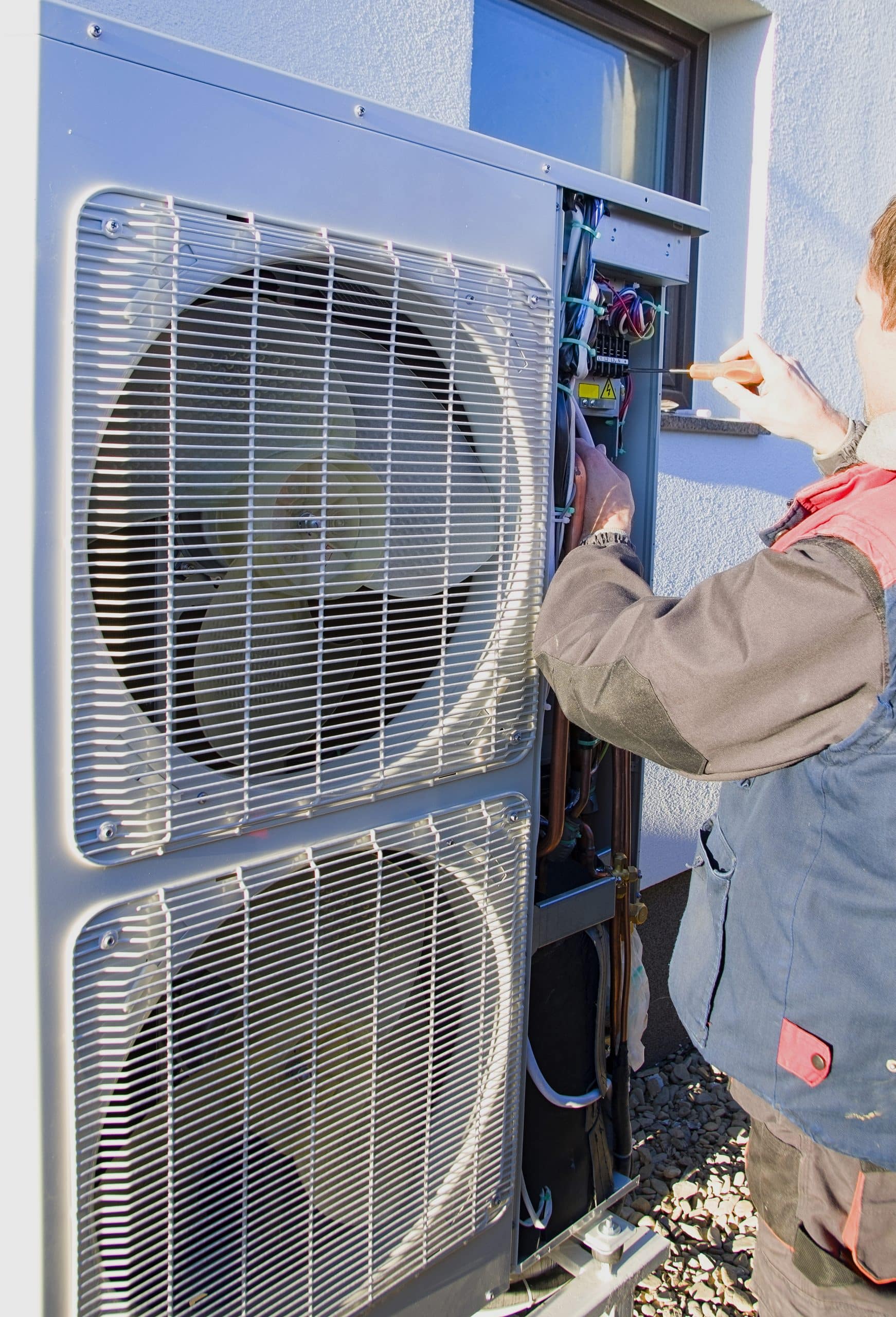
Second, equipment selection. Based on the load calculation and your budget, the contractor recommends specific models and configurations. This is where SEER2 rating, refrigerant type, variable-speed vs. single-stage compressor, and any whole-home dehumidification options come into the discussion. A good contractor explains the tradeoffs clearly and does not push a single option without context.
Third, permit application. The permit is pulled before work begins. In most New Orleans area jurisdictions, the contractor handles this directly. Some permits are issued same-day, others take a few days. Plan for this in your scheduling, especially if you are trying to time the replacement around a system that is failing but still limping along.
Fourth, removal and installation. The old system is recovered and recycled properly by an EPA 608-certified technician. Refrigerant recovery is required by federal law and cannot be skipped. The new equipment is installed, the refrigerant lines are checked for leaks, the system is charged to manufacturer specification, and the electrical connections are made and verified. A good installation includes verifying airflow at each register, checking return air sizing, and testing the thermostat through a full cycle.
Fifth, inspection. The city or parish inspector verifies the installation before the permit is closed. This protects you as the homeowner and confirms the work meets code.
Sixth, documentation. You should receive the manufacturer’s warranty registration, the permit closeout paperwork, the equipment serial numbers, and any documentation needed for a utility rebate claim.
Timing Your Replacement Strategically
The worst time to replace an air conditioner in New Orleans is during a July or August emergency. Contractors are at maximum capacity, equipment availability can be tighter, and the urgency of the situation removes your ability to compare options carefully. If your system is showing the signs described earlier in this post, a spring replacement, before the heat peaks, gives you better scheduling flexibility, more time to evaluate equipment options, and potentially better pricing on equipment that is not in crisis demand.
Late winter and early spring are also when rebate programs tend to reset and equipment inventory is freshest. Contractors can schedule non-emergency replacements with more care, and you are not making a $6,000 to $12,000 decision in 95-degree heat with no working AC in the house.
If your system is limping through a season and you suspect it may not make another one, getting a replacement assessment done now costs nothing and gives you a clear plan before the emergency happens.
Frequently Asked Questions
How long should an air conditioner last in New Orleans?
In most of the country, a well-maintained central AC system lasts 15 to 20 years. In New Orleans, realistic expectations are 10 to 14 years for most systems due to the extended cooling season and high humidity. A system that runs 10 to 12 months per year accumulates operating hours far faster than one running 4 to 5 months, so age in calendar years understates the actual wear on NOLA equipment.
What does air conditioning replacement cost in New Orleans?
A full central AC replacement in the New Orleans metro area typically runs between $5,500 and $14,000, depending on system size, efficiency rating, equipment brand, duct work condition, and whether the project involves a straight AC swap or a heat pump installation. Permit fees, refrigerant disposal, and any ductwork repairs add to the base equipment and labor cost. Higher-efficiency 18 to 20 SEER2 systems carry a premium over the minimum 15 SEER2 units, but the efficiency gap pays back over time through lower Entergy bills.
Does New Orleans require a permit to replace an air conditioner?
Yes. The City of New Orleans requires a permit for HVAC replacement, and Jefferson Parish jurisdictions including Metairie and Kenner have similar requirements. Work done without a permit can affect your homeowner’s insurance coverage, complicate a home sale, and void the equipment manufacturer’s warranty. A licensed contractor will pull the permit before work begins and arrange the required inspection.
What is the SEER2 minimum for replacement systems in Louisiana?
As of January 2023, the Department of Energy minimum efficiency for split-system central air conditioners sold in the South, which includes Louisiana, is 15 SEER2. This is higher than the national minimum that applies in northern states. Systems below this rating cannot be sold as new equipment in the region. Many contractors offer systems ranging from 15 to 20 SEER2, and higher-efficiency options may qualify for Entergy rebates.
Is the federal 25C tax credit still available for replacing my AC?
No. The IRS says the Energy Efficient Home Improvement Credit (25C) covers only improvements made through December 31, 2025, so an AC or heat pump installed after that date does not qualify for it. If your system was installed in 2025 or earlier, keep your purchase receipts and the manufacturer’s efficiency certification statement, and consult a tax professional about your eligibility.
Can I replace just the outdoor unit without replacing the indoor coil?
Technically possible in some cases, but generally not recommended. The outdoor condenser and indoor evaporator coil are designed to work as a matched system. Mismatching a new outdoor unit with an old indoor coil can result in efficiency losses, potential refrigerant handling issues, and warranty complications. Most manufacturers require matched indoor and outdoor components for the warranty to apply. A licensed contractor can assess whether a partial replacement is appropriate or whether full system replacement is the right call given your existing equipment condition.
What should I ask an HVAC contractor before signing a replacement contract?
Ask for their LSLBC license number and verify it. Ask whether they will pull a permit before work begins. Ask how they size the replacement system, and specifically whether they perform a Manual J load calculation. Ask what refrigerant the new system uses and whether it has any refrigerant phasedown exposure in the near future. Ask what the warranty covers on both parts and labor, and who the warranty is backed by. Ask for an itemized quote that separates equipment cost, labor, permit fees, and any ductwork work. A contractor who answers all of these questions confidently and specifically is one who takes the work seriously.
Ready to Replace? Call Big Easy AC Heating
If your system is aging, your Entergy bills are climbing, or you’ve had one repair too many in the last couple of years, a replacement assessment is the right next step. Big Easy AC Heating serves homeowners throughout New Orleans, Metairie, Kenner, Slidell, Covington, Mandeville, Harahan, River Ridge, Gretna, and Westwego. Call 504-608-4636 to schedule an assessment. We will evaluate your existing system, measure your home properly, and give you a clear picture of your options, with honest guidance on whether repair or replacement makes more sense for your specific situation.