

New Orleans does not have a typical climate, and its HVAC demands reflect that. The city runs its air conditioning for 10 to 12 months out of the year, squeezes in a handful of weeks when neither heating nor cooling is needed, then faces a short winter that is mild by national standards but real enough to matter. Big Easy AC Heating works with homeowners across the metro area on exactly this challenge: building a year-round comfort system that handles the heat, the humidity, and the occasional cold front without running up an Entergy bill that hurts every month.
This overview covers the equipment types that actually make sense here, the efficiency standards that apply to Louisiana, the humidity problem that most guides skip, and the financial incentives currently available for homeowners upgrading their systems.
Why New Orleans HVAC Is Its Own Category
Most national HVAC guidance is written for climates with a balanced mix of heating and cooling days. New Orleans does not have that balance. The cooling season here stretches from roughly March through November, sometimes into December. The heating season covers December through February, with many days in between that require nothing at all.
That imbalance changes the calculation on nearly every equipment decision. A gas furnace sized for a Chicago winter is massive overkill for a New Orleans home that needs heat maybe 40 days a year. A heat pump that struggles to extract warmth from 15-degree air is perfectly comfortable pulling heat from 45-degree New Orleans air, because the physics work in its favor at that temperature range.
The other factor that separates New Orleans from most of the country is humidity. Gulf Coast air carries significant moisture year-round, and an air conditioner in this city is not just a cooling machine. It is a dehumidifier. When equipment is not selected and sized with that in mind, you get homes that feel clammy even when the thermostat reads 72 degrees.
Cooling Systems Used in New Orleans Homes
Central Split Systems
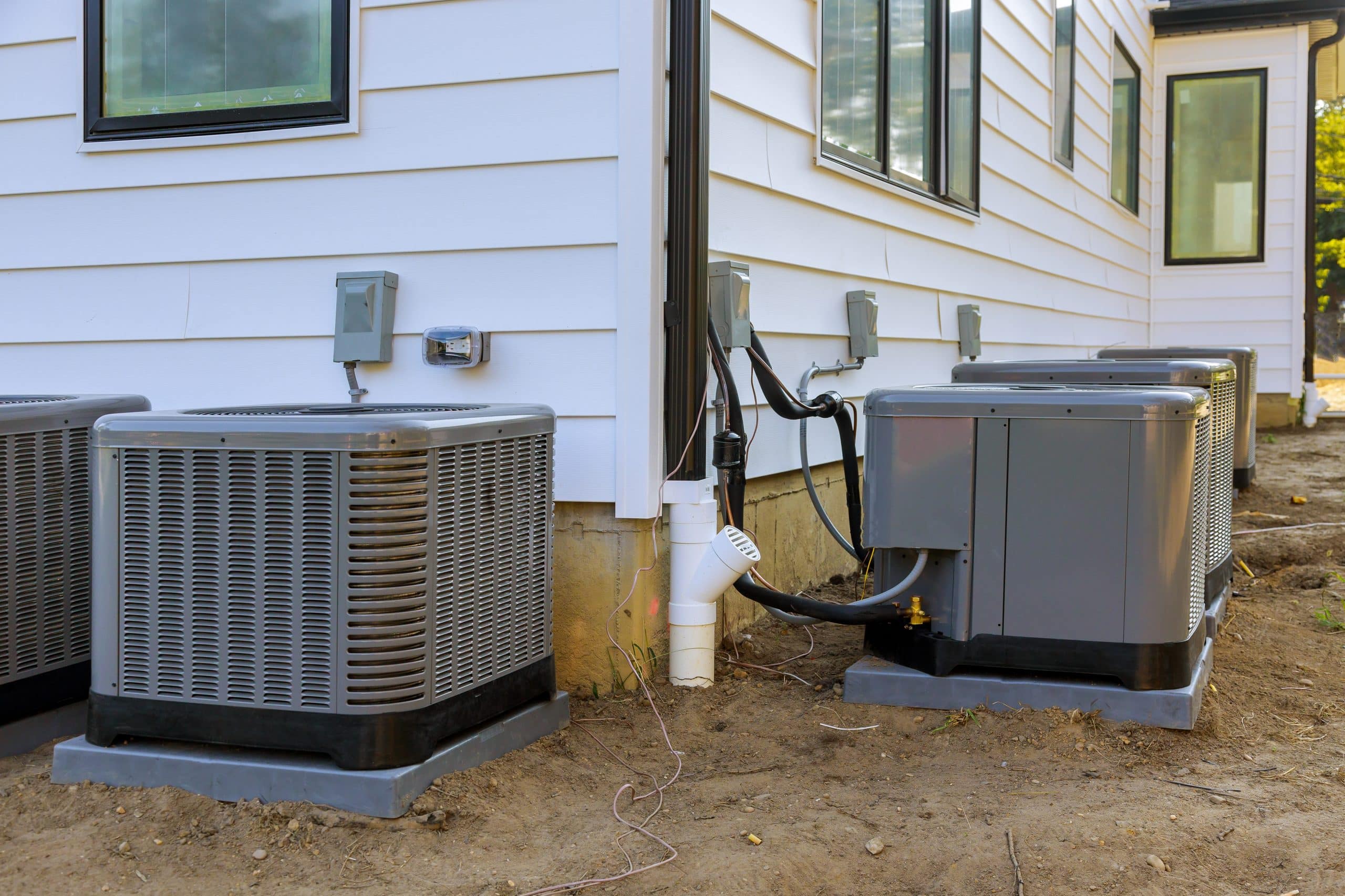
The central split system is the standard setup in most New Orleans homes built since the 1970s. An outdoor condenser unit sits beside the house, an indoor air handler sits in the attic or a utility closet, and refrigerant lines connect the two. The system moves refrigerant between the two units, absorbing heat from inside your home and releasing it outside.
For homes with existing ductwork in good condition, central split systems offer the most cost-effective way to cool large square footage. The efficiency is measured in SEER2, which replaced the older SEER rating in 2023. In Louisiana and the rest of the South region, new equipment must meet a minimum SEER2 of 15. Higher-efficiency models in the 18 to 20 SEER2 range cost more upfront but reduce monthly Entergy bills meaningfully over time.
Ductless Mini-Splits
Ductless mini-splits work on the same refrigerant-cycle principle as central systems, but without ductwork. An outdoor unit connects to one or more indoor wall-mounted or ceiling-cassette units through refrigerant lines and electrical connections run through a small hole in the wall.
In New Orleans, mini-splits solve problems that central systems cannot. Older shotgun houses and double-shotguns often have no attic space suitable for ductwork, or the existing ducts are deteriorated beyond cost-effective repair. Room additions, converted garages, and second-floor master suites frequently fall outside the reach of the main system. Mini-splits handle all of these situations with high efficiency, often reaching SEER2 ratings above 20.
The downside is cost per square foot. A mini-split system serving multiple zones costs more than adding equivalent capacity to an existing ducted system. For a whole-house replacement in a home that lacks ductwork entirely, however, mini-splits are often the right answer.
Package Units
Package units combine the compressor, condenser, and air handler into a single cabinet installed outside the home, typically on a rooftop or concrete pad. They are common in commercial buildings, mobile homes, and some slab-foundation homes where interior space for an air handler is limited.
For residential applications, package units are generally less efficient than split systems of comparable size. They also expose more components to the outdoor elements, which in coastal Louisiana means accelerated corrosion from salt air. Most residential replacements move away from package units when the opportunity presents itself.
Heating Systems in New Orleans: What Actually Makes Sense
Heat Pumps: The Dominant Choice
Heat pumps are the most sensible heating solution for most New Orleans homes, and the numbers explain why clearly. A heat pump does not generate heat by burning fuel or converting electricity to heat directly. Instead, it uses refrigerant to move heat that already exists in outdoor air into your home. Even at 40 degrees Fahrenheit, there is enough thermal energy in the air for a heat pump to extract and transfer indoors.
The efficiency metric for this process is the coefficient of performance, or COP. In mild temperatures like those common during a New Orleans winter, a heat pump achieves a COP of 2 to 3. A COP of 3 means the system delivers 3 units of heat energy for every 1 unit of electrical energy it consumes. That is 300 percent efficiency, compared to 100 percent for electric resistance heat. Gas furnaces operate at 80 to 97 percent efficiency depending on the model.
The federal efficiency standard for heat pumps in the South region is a minimum HSPF2 of 7.5. Higher HSPF2 ratings indicate better cold-weather performance. Because New Orleans rarely pushes heat pumps into the extreme-cold conditions where their efficiency drops, high HSPF2 ratings are achievable here throughout the heating season.
The reversing valve is what makes a heat pump work in both directions. In cooling mode, the valve directs refrigerant to absorb heat indoors and release it outside. In heating mode, the valve reverses the flow, absorbing heat from outdoor air and releasing it inside. One piece of equipment, one refrigerant system, and one set of maintenance requirements covers the entire year.
Gas Furnaces
Gas furnaces are still found in many older New Orleans homes, particularly those built before heat pump technology became widely available and cost-competitive. A furnace burns natural gas to produce heat, which a heat exchanger then transfers to the air moving through your ductwork.
Modern high-efficiency furnaces reach Annual Fuel Utilization Efficiency (AFUE) ratings of 96 to 98 percent, meaning nearly all of the gas they burn becomes usable heat. For New Orleans homeowners who already have a gas furnace paired with a separate central AC system, replacing just the AC with a higher-efficiency unit while keeping the furnace is sometimes the right short-term move, particularly if the furnace is relatively new.
Given the short heating season here and the availability of IRA tax credits for heat pump installations, many New Orleans homeowners replacing aging systems are choosing to move from a furnace-plus-AC setup to a heat pump that handles both functions.
Electric Strip Heat
Electric strip heat converts electricity directly into heat at 100 percent efficiency. That sounds good until you compare it to a heat pump at 250 to 300 percent effective efficiency. Strip heat is common in older homes that were never plumbed for gas and in homes where strip heating coils were installed inside air handlers as a supplement or backup.
Running electric strip heat as a primary heating source during a New Orleans winter is noticeably expensive. The electricity consumption during a cold week can rival AC usage during a mild summer week. If your home currently relies on strip heat as the primary source and your air handler is aging, moving to a heat pump at replacement time is almost always the right financial decision.
The Humidity Problem and How to Address It
Humidity control is where New Orleans HVAC gets technical in ways that matter to your comfort every single day. The total load your air conditioning system must handle breaks into two components. The sensible load is the heat you can measure with a thermometer: bringing room temperature from 82 degrees down to 74 degrees. The latent load is the moisture in the air: removing enough water vapor to bring relative humidity from 70 percent down to 50 percent.
In dry climates, latent load is a minor consideration. In New Orleans, it is a major design factor. Your AC removes moisture only while it is running. A system that is oversized for a home cools the temperature quickly and shuts off before it has had time to address the moisture in the air. The thermostat reads your target temperature, but the air feels sticky and uncomfortable because the relative humidity is still high.
This is why equipment sizing in New Orleans must be done with a Manual J load calculation, not with a simple square footage rule of thumb. Manual J accounts for your home’s insulation values, window area and orientation, construction type, local climate data including humidity levels, and the occupancy and internal heat gains in the building. A properly sized system runs longer cycles that drop both temperature and humidity to comfortable levels.
Whole-house dehumidifiers are another option for homes where even a properly sized AC struggles to maintain comfortable humidity levels during the most intense summer weeks. These units work alongside the AC system and have their own drain, pulling additional moisture out of the air independently of the cooling cycle.
Ductwork: The System Component Most Often Overlooked
New Orleans attics are brutal environments. Summer temperatures in an unconditioned attic here regularly exceed 140 degrees Fahrenheit. Ductwork running through that space, if it is not properly sealed and insulated, loses a significant portion of the conditioned air it is supposed to deliver to your living spaces.
The Department of Energy estimates that typical duct systems lose 20 to 30 percent of the conditioned air that moves through them due to leaks and poor insulation. In a New Orleans attic at 140 degrees, that number can be higher. A high-efficiency air conditioner installed on a leaky duct system will never perform at its rated efficiency, because much of what it produces never reaches the rooms you are trying to cool.
Before or alongside any equipment replacement, duct condition is worth evaluating. Duct leakage testing identifies where losses are occurring. Sealing leaks with mastic (not standard duct tape, which fails over time in high-heat environments) and adding insulation to R-8 or higher on ducts in unconditioned attic space directly improves the performance of whatever equipment is connected to it.
In homes where ductwork is deteriorated past the point of cost-effective repair, the choice is between full duct replacement and moving to a ductless mini-split system. Both are legitimate options depending on the home’s layout and the homeowner’s budget.
Entergy New Orleans and the Cost of HVAC Efficiency
Entergy New Orleans serves most of the city proper, with Entergy Louisiana covering surrounding areas including Metairie, Kenner, and the Northshore communities. Both entities have current residential electricity rates that make HVAC efficiency a direct monthly financial consideration.
A central air conditioner running through a New Orleans summer is the largest single draw on most residential Entergy bills. The difference in monthly operating cost between a 14 SEER2 system and an 18 SEER2 system on the same home is meaningful. An 18 SEER2 system uses roughly 22 percent less electricity for the same cooling output. On a home running a 3-ton system 10 hours a day, that difference compounds quickly over the 10 to 12 month cooling season here.
Heating shows up on Entergy bills too, whether your heat comes from a heat pump (electric) or a separate gas furnace. Entergy Louisiana and Entergy New Orleans periodically offer rebate programs for qualifying high-efficiency equipment. Eligibility and amounts change, so checking current offerings at the time of purchase is worth the few minutes it takes.
IRA Tax Credits for New Orleans Homeowners
The Inflation Reduction Act of 2022 created the Energy Efficient Home Improvement Credit (25C), which provides federal income tax credits for qualifying HVAC upgrades. The credits reset annually, meaning a homeowner can claim them in multiple tax years for multiple projects.
For heat pumps that meet the efficiency requirements, the credit is up to $2,000 per year. For central air conditioners that meet the efficiency requirements, the credit is up to $600. These are credits against your tax liability, not deductions, which means they directly reduce the amount of federal income tax you owe dollar for dollar, up to the cap.
Equipment must meet specific efficiency thresholds to qualify. Heat pumps need to meet the ENERGY STAR requirements for the product class. For split heat pumps in the South region, that currently means SEER2 of at least 15.2 and HSPF2 of at least 7.8. Central AC units need SEER2 of at least 15.2 for split systems.
The $2,000 heat pump credit is particularly relevant for New Orleans homeowners replacing gas furnace-plus-AC setups with a single heat pump system. The credit helps offset the upfront cost difference and, combined with lower monthly Entergy operating costs, typically shortens the payback period on the efficiency upgrade substantially.
A licensed tax professional should advise on your specific situation, as income, tax liability, and project timing all affect how these credits apply.
LSLBC Licensing and Why It Matters
Louisiana requires HVAC contractors to hold an LSLBC (Louisiana State Licensing Board for Contractors) license for installation and major repair work. Working with an unlicensed contractor on HVAC installation creates real exposure for homeowners.
Manufacturer warranties on HVAC equipment typically require installation by a licensed contractor. If an unlicensed contractor installs your system and it fails within the warranty period, the manufacturer has grounds to deny the claim. Homeowner’s insurance claims related to HVAC-caused damage can also be complicated by unlicensed work.
Permits are required for HVAC installation in most Louisiana jurisdictions. A licensed contractor pulls the permit, which triggers an inspection by the local authority. That inspection confirms the installation meets current code, which matters both for safety and for your home’s value when you go to sell.
Verifying a contractor’s LSLBC license takes about 30 seconds on the LSLBC website. The license number should be on any estimate or proposal a contractor provides. If it is not there, ask before signing anything.
Year-Round Maintenance in the New Orleans Climate
A system running 10 to 12 months per year accumulates wear faster than national averages. Maintenance that might make sense annually in milder climates should happen twice a year in New Orleans: once in spring before the cooling season peaks, and once in fall before any heating demand arrives.
Spring maintenance covers the critical items before summer load arrives: coil cleaning (both indoor evaporator and outdoor condenser), refrigerant level check, electrical connection inspection, drain line flush, and thermostat calibration. The outdoor condenser in particular collects debris, pollen, and in coastal areas, salt buildup that accelerates corrosion if left on the coil.
Fall maintenance checks the heating function before you need it. For heat pumps, this means verifying the reversing valve operates correctly, checking the defrost cycle function, and confirming the auxiliary heat strips engage properly if your system has them. For gas furnaces paired with AC systems, fall maintenance includes burner inspection, heat exchanger check for cracks, and flue venting verification.
Filter replacement sits outside the twice-yearly maintenance visits. In New Orleans, monthly filter checks during peak cooling season are sensible. A clogged filter restricts airflow across the evaporator coil, which drops the coil temperature below the dew point and can cause the coil to freeze. A frozen coil does not cool or dehumidify. Keeping the filter clean is the single simplest thing a homeowner does to protect HVAC performance.
Thermostat Choices and Programming for NOLA Conditions
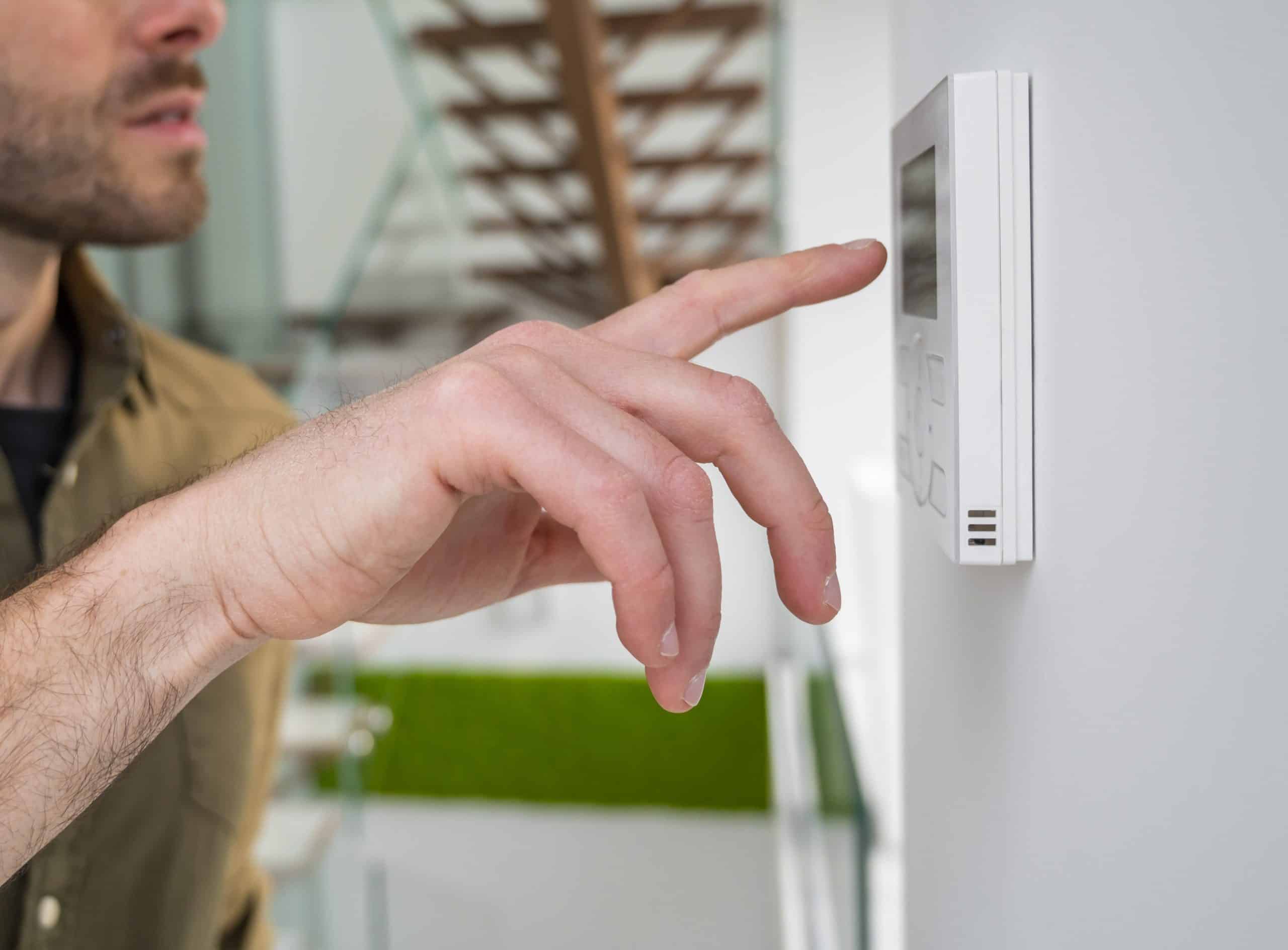
A programmable or smart thermostat does not reduce the fundamental load your home places on its HVAC system. What it does is time that load better. Pre-cooling your home before the peak afternoon heat arrives, then allowing the temperature to rise slightly during the hottest part of the day when electricity demand is highest, is a standard strategy for managing Entergy bills without sacrificing comfort.
For heat pump systems specifically, setback strategies require some thought. Heat pumps are most efficient when they maintain a steady temperature rather than recovering from large setbacks. If the thermostat drops 5 degrees overnight and then calls for recovery in the morning, the system may activate the auxiliary electric resistance heat strips to speed recovery, which consumes significantly more electricity than the heat pump alone. Smart thermostats designed for heat pump operation handle this better by using gradual recovery strategies that keep the heat pump doing the work rather than triggering the strips.
Humidity control settings are available on some smart thermostats and on standalone whole-house dehumidifiers. Setting a humidity target of 50 percent relative humidity keeps the home comfortable and discourages mold growth, which is a year-round concern in this climate.
Service Areas: Where Big Easy AC Heating Works
Big Easy AC Heating serves homeowners throughout the greater New Orleans metro area. The team handles service calls, repairs, and full system replacements in New Orleans, Metairie, Kenner, Harahan, River Ridge, Gretna, and Westwego on the East Bank and West Bank. Northshore customers in Slidell, Covington, and Mandeville are also within the service area.
The service area spans the range of housing types this metro produces: older shotgun houses in Mid-City and Gentilly with original ductwork challenges, newer construction in Metairie and Kenner with standard attic systems, raised pier-and-beam homes on the Northshore, and slab-foundation homes across the West Bank. Each property type has its own HVAC considerations, and the team is familiar with all of them.
Frequently Asked Questions
What type of heating system works best in New Orleans?
Heat pumps are the dominant choice in New Orleans because our winters are mild enough that the system operates at a coefficient of performance (COP) of 2 to 3, meaning it delivers 200 to 300 percent of the energy it consumes. Gas furnaces are still found in older homes, and electric strip heat is common but expensive to run. For most New Orleans homeowners replacing equipment today, a heat pump handles both heating and cooling in one unit.
What SEER2 rating do I need for a new AC in Louisiana?
Louisiana falls in the South region, which requires a minimum SEER2 of 15 for new central air conditioning equipment and a minimum HSPF2 of 7.5 for heat pumps. Equipment sold in the North region can have lower ratings, so when comparing prices online, confirm you are looking at South-region compliant units.
Why does humidity matter when sizing an AC system in New Orleans?
New Orleans humidity means your air conditioner carries two loads at once: sensible load (lowering air temperature) and latent load (removing moisture from the air). An oversized system short-cycles, which means it cools the temperature quickly but shuts off before it has time to dehumidify properly. You end up with a home that feels cold but clammy. Proper Manual J load calculation accounts for both loads and selects equipment sized to run longer cycles that actually dry the air.
Can I get a tax credit for a new heat pump or AC in New Orleans?
Yes. The Inflation Reduction Act (IRA) provides federal tax credits for qualifying HVAC equipment. Heat pumps can qualify for up to $2,000 per year, and central air conditioners can qualify for up to $600. The credit applies to the tax year you install the equipment. Income limits do not apply to these credits, but the equipment must meet specific efficiency thresholds. Consult a tax professional for your situation.
How long does an HVAC system last in the New Orleans climate?
In New Orleans, air conditioners typically run 10 to 12 months out of the year, which puts significantly more wear on equipment than the national average. A well-maintained system lasts 12 to 15 years in this climate. Systems that run without annual maintenance or that were improperly sized at installation tend to fail earlier, sometimes at 8 to 10 years.
What neighborhoods in New Orleans does Big Easy AC Heating serve?
Big Easy AC Heating serves the greater New Orleans area including Metairie, Kenner, Slidell, Covington, Mandeville, Harahan, River Ridge, Gretna, and Westwego. Call 504-608-4636 to schedule service or get a free estimate.
Do I need a licensed contractor for HVAC installation in Louisiana?
Yes. Louisiana requires an LSLBC license for HVAC installation and major repairs. Hiring an unlicensed contractor voids most manufacturer warranties and can create problems with homeowner’s insurance claims. Always verify licensing before any work begins.
Ready to Talk About Your Home’s HVAC System?
Whether you are pricing a full system replacement, troubleshooting a system that is not keeping up with summer heat, or planning ahead before the next breakdown, call 504-608-4636 to reach the Big Easy AC Heating team directly. The office is at 4323 Division Street, Suite 211, Metairie, LA 70002. Estimates are free, and the team serves New Orleans, Metairie, Kenner, Harahan, River Ridge, Gretna, Westwego, Slidell, Covington, and Mandeville.