

Quick Summary
A heating system in New Orleans should be professionally serviced once a year, before the heating season begins in autumn. Homes running a heat pump need attention twice a year instead, because the same equipment carries the cooling load through a long summer and the heating load through winter. Filters need changing far more often than that, typically every one to three months. Big Easy AC Heating schedules autumn service across New Orleans, Metairie, Kenner and the surrounding parishes, and the timing matters as much as the frequency, because a fault found in October is an appointment while the same fault found in January is an emergency.
Last Updated: September 2026
What this guide covers
Once a year is the answer for a furnace, and twice a year for a heat pump. The difference is not a sales position, it follows from what the equipment does. A furnace sits idle through the New Orleans summer and works for a few months. A heat pump never gets that break, because it is the same machine cooling the house in August and heating it in January.
Timing carries most of the value. Big Easy AC Heating books heating service through autumn for a straightforward reason: a heat exchanger problem or a failed ignitor discovered during a routine October visit is a scheduled repair at an ordinary price, while the same fault discovered on the first genuinely cold night is an emergency call competing with everyone else in the city who skipped their service.
How Often Does a Furnace Need Professional Service?
Once a year, before the heating season. That single annual visit covers the safety checks that matter most, including heat exchanger inspection, flue and venting condition, gas pressure, and the ignition and safety controls. Skipping it does not usually produce an immediate failure, which is exactly why it gets skipped.
The safety argument is the one worth taking seriously. A cracked heat exchanger is not a performance problem, it is a combustion products problem, and it is not something a homeowner can see or smell reliably. That inspection is the reason annual service is a standard recommendation rather than a suggestion, and it is why our furnace work begins with it rather than treating it as an optional extra.
A carbon monoxide detector is a second line of defence, not a substitute for that inspection. A detector tells you a problem has already reached the room you are standing in. The annual check exists to find the crack before it ever gets that far, which is a different job entirely.
Why Do Heat Pumps Need Servicing Twice a Year?
Because a heat pump has no off season here. It cools the house through a summer that runs most of the year and heats it through winter, so it accumulates substantially more runtime than a system that only does one job. Two visits, one before each season, keep pace with that wear.

The two visits are not the same visit repeated. Autumn service concentrates on the heating side, checking the reversing valve, defrost control, auxiliary heat and the changeover behaviour that only operates in cold weather. Spring service concentrates on cooling capacity, refrigerant charge, coil condition and condensate drainage, which is the side that matters through a South Louisiana summer. Booking both through a single AC and heating maintenance arrangement is how most homeowners here keep it from slipping.
What Should a Proper Heating Service Actually Include?
A real service is an inspection with measurements, not a filter change and a sticker. If the visit takes fifteen minutes and produces no readings, you have bought a sticker. The list below is what a genuine heating service covers, and it is reasonable to ask which of these were performed.
- Heat exchanger inspection for cracks, corrosion and separation.
- Flue and venting check, confirming combustion products leave the building as designed.
- Ignition system, flame sensor and safety control testing.
- Gas pressure and burner condition, where the system burns fuel.
- Blower motor, wheel condition and measured airflow across the system.
- Electrical connections, capacitors and contactors checked and tightened.
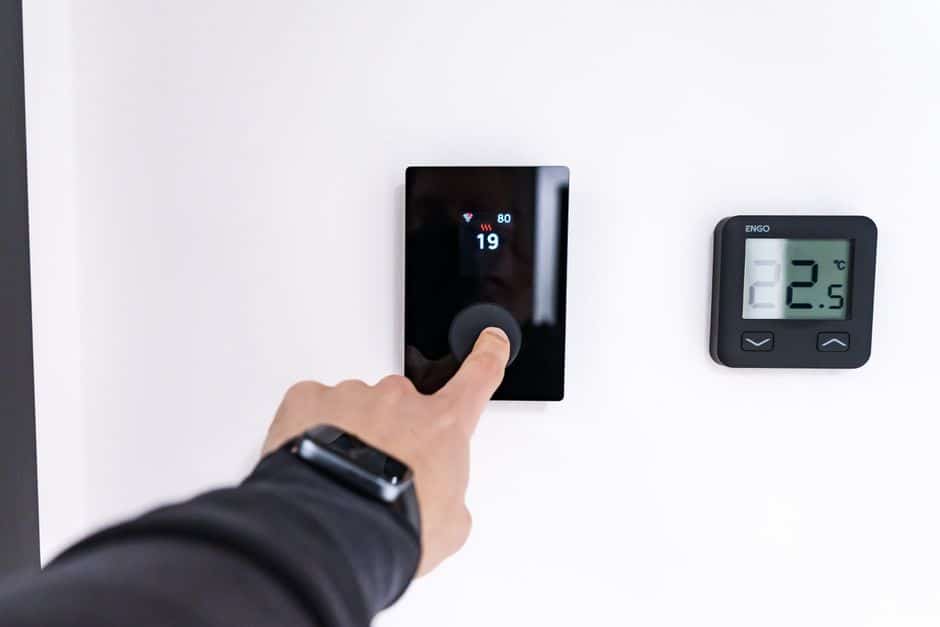
- Thermostat calibration and correct changeover behaviour.
- Condensate drain clearing, which matters here far more than in dry climates.
- For heat pumps, reversing valve, defrost cycle and auxiliary heat operation.
Ask for the readings in writing. A service record showing measured values year on year is what turns maintenance from an expense into evidence, and it is what tells you a system is drifting before it fails.
How Often Should Filters Be Changed Between Services?
Every one to three months for most homes, and toward the shorter end in New Orleans. Pets, dust, renovation work and a system that runs close to year round all shorten filter life. This is the one maintenance task a homeowner controls entirely, and it is the one most often behind an avoidable repair.
The failure chain is worth understanding, because it explains why something so small causes expensive problems. A blocked filter restricts airflow. Restricted airflow makes the blower work harder and lets the coil run colder than designed. A coil running too cold in humid air freezes, and a frozen coil stops the system and can damage the compressor. That sequence starts with a part costing a few dollars, which is the whole argument for the habit.
What Happens If You Skip Heating Service Entirely?
Three things, in a predictable order. Efficiency drifts down so bills rise quietly, small faults go unnoticed until they become failures, and many manufacturers’ parts warranties require documented annual professional maintenance, so a claim can be refused on a unit that was never serviced.
- Book service in autumn, before the first cold snap creates a queue.
- Keep the written service record, since it is what supports a future warranty claim.
- Change filters on schedule between visits, tracking the date somewhere you will see it.
- Report small changes early, because a new noise or a longer run time is cheaper to investigate than to ignore.
- Where repairs are starting to repeat, get replacement pricing before the system decides for you.
That last point has its own arithmetic, and we set out where the usual industry shorthand holds and where it misleads people locally in our piece on the $5,000 rule applied to New Orleans homes. Our pre-winter checklist covers what to do before the season starts, and the full year-round schedule sets out every task by month.
Frequently Asked Questions
When is the best month to book heating service in New Orleans?
October is the practical target, once summer cooling demand has eased and before the first cold nights arrive. Booking then avoids both the busiest repair periods of the year.
Does a heat pump really need two services a year?
Yes, because it carries both the heating and the cooling load, so it runs far more hours than a single season system. The two visits cover different components rather than repeating the same checks.
Can I do heating maintenance myself?
You can change filters, keep the outdoor unit clear and watch the condensate drain. Heat exchanger inspection, gas pressure, refrigerant and electrical testing all require a qualified technician and the right instruments.
Will skipping service void my warranty?
Many manufacturers’ parts warranties require documented annual professional maintenance, so a claim can be refused without that record. Check the specific terms for your equipment, because they vary by brand.
How often should the filter be changed if I have pets?
Closer to monthly than quarterly. Pet hair loads a filter far faster, and a restricted filter is behind a large share of airflow and coil freezing problems in this climate.
Who services heating systems in the New Orleans area?
Big Easy AC Heating services furnaces and heat pumps across New Orleans, Metairie, Kenner, Slidell and the surrounding parishes, and provides a written record of the checks and readings taken.
If your system has not been looked at since last winter, autumn is the window to deal with it cheaply. Call Big Easy AC Heating at 504-608-4636 or book a service visit online, and you will get the full inspection above with the readings written down, not a sticker on the side of the unit.