

If your Uptown home was built before 1960, your HVAC system is doing more work than it should, and your Entergy bill is probably telling you that already. Big Easy AC Heating works throughout Uptown New Orleans, and the older housing stock here creates maintenance needs that a standard tune-up checklist simply does not cover. Shotgun house layouts, uninsulated attic ductwork, live oak pollen loads, and 10-foot ceilings all push HVAC systems harder than they push systems in newer construction. Knowing what those specific problems look like is the first step toward fixing them.
Why Uptown New Orleans Is Different From Every Other Service Area
Most of the residential neighborhoods in New Orleans were developed in concentrated waves. The Garden District took shape in the mid-1800s. The Audubon neighborhood filled in through the early 1900s. Riverbend and Carrollton saw most of their development between 1900 and 1940. By the time central air conditioning became a standard feature in American home construction, Uptown was already built. So most homes in zip codes 70115, 70118, and 70130 were designed around natural ventilation, high ceilings, and window units. Central HVAC was retrofitted into these houses later, often without addressing the structural factors that make those systems work poorly.
That history shows up in service calls. A house in Metairie with a properly sized system and insulated ducts in a conditioned attic behaves predictably. A shotgun double on Prytania Street behaves completely differently, and treating it like a Metairie ranch house is how systems get undersized, ductwork gets undersized, and homeowners end up with rooms that never reach the thermostat setpoint.
The Attic Ductwork Problem
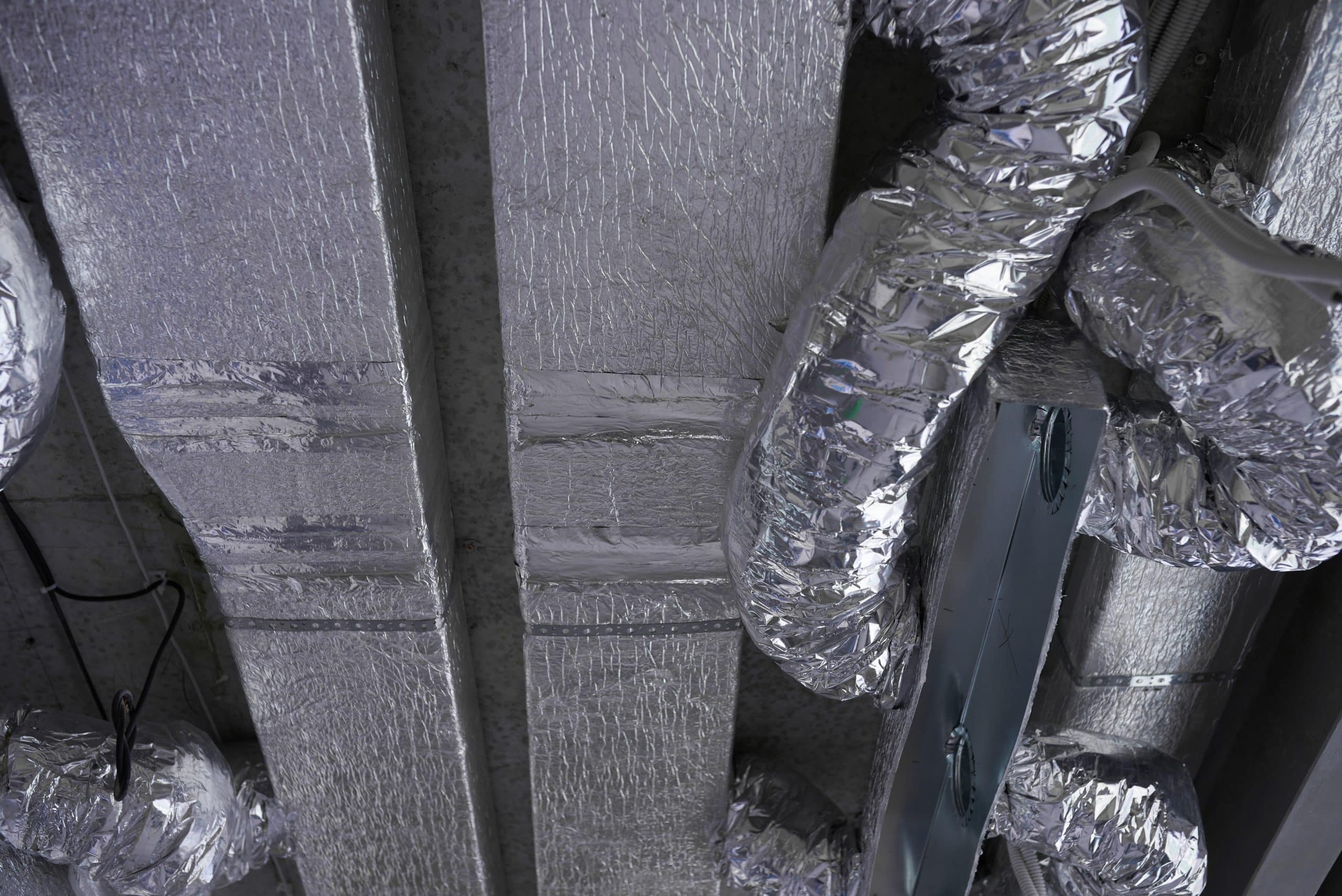
This is the most common efficiency killer in Uptown older homes, and it is almost always invisible until a technician actually gets into the attic. Most pre-1960 homes have ductwork that runs through unconditioned attic space. Uptown attics in summer regularly reach 140 to 160 degrees Fahrenheit. The ductwork carrying conditioned air from your air handler sits in that heat, and if it is not properly insulated and sealed, you lose a significant portion of that cooling before it ever reaches the living area.
The fix is not always replacing the ductwork. Sometimes the ducts are in decent shape structurally but have lost their insulation value or developed gaps at the joints. Mastic sealant on the joints and R-8 duct wrap can dramatically cut those losses without a full replacement. When the ductwork is old flex duct that has collapsed or kinked in spots, or when the layout is so indirect that air velocity drops before reaching the registers, replacement is the right call.
One thing worth understanding: attic duct insulation upgrades fall under the City of New Orleans mechanical permit requirements when they are part of a system replacement, but often do not require a separate permit when done as a standalone service. Your contractor should know the current permit threshold and should pull the permit when required. Work done without a permit creates problems at resale and can void equipment warranties.
High Ceilings and the Stratification Problem
Ten- and twelve-foot ceilings are one of the features that draw people to Uptown homes. They also create a physics problem for air conditioning. Cold air is denser than warm air. It sinks to floor level, where people actually are, and the system registers that as a success. Meanwhile, warm air rises and pools near the ceiling, where it radiates heat back down into the room. The thermostat, usually mounted at 5 feet, reads the cooler air level and cycles off. The room still feels warm to anyone sitting or standing.
There are a few ways to address this. Ceiling fans running counterclockwise in summer push the warm ceiling air down and help mix the room air, which lets the thermostat get a more accurate reading. Register placement matters too: supply registers high on the wall, blowing across the ceiling, allow the cold air to mix with the warm air above before sinking, which creates more even temperatures at occupant level. If the system is being redesigned or replaced, a zoning control with separate temperature sensors can account for the stratification in larger rooms.
The stratification issue also explains why some homeowners in Uptown keep lowering the thermostat setpoint trying to get comfortable. The problem is not capacity. The problem is distribution and mixing. A maintenance visit that includes an airflow check and a conversation about ceiling fan operation and register placement often changes the perception of the system without touching the equipment.
Oak Trees, Pollen, and Your Filters
New Orleans is famously green, and Uptown has the densest tree canopy in the city. Live oaks along St. Charles Avenue, Napoleon Avenue, and Audubon Boulevard shed pollen from February through April, then drop seed pods, leaves, and debris continuously through the rest of the year. That material gets pulled into outdoor units and into your home through any opening, and it hits HVAC filters hard.
Standard 1-inch fiberglass filters on a 90-day change schedule are not adequate for most Uptown homes during pollen season. A clogged filter restricts airflow across the evaporator coil. Restricted airflow causes the coil to get too cold, which leads to ice forming on the coil, which means the system stops cooling entirely until the ice melts. That sequence is the most common emergency service call we handle in Uptown each spring.
MERV 11 or MERV 13 filters catch more of the particulate but need to be changed more often, and they must be matched to the system’s blower motor. An oversized filter media in an older air handler can restrict airflow enough to cause the same icing problem you were trying to prevent. Get a recommendation from your technician based on your specific equipment before upgrading filter ratings on your own.
Outdoor condenser units near large oaks also need coil cleaning more often than units in open suburban yards. Oak debris packs into the coil fins and blocks the airflow the condenser needs to release heat. An annual coil cleaning is the minimum. Some Uptown properties need it twice a year depending on the tree situation.
Shotgun House Airflow: A Layout That Was Never Designed for Central Air
The shotgun house is a New Orleans architectural form built on a single-file room layout: front room, middle room, back room, one behind the other with no hallway. The name comes from the idea that you could fire a shotgun through the front door and the shot would exit the back door. That layout was brilliant for cross-ventilation in the pre-AC era. It is genuinely challenging for central air conditioning.
When a single air handler is installed in a shotgun house, usually in the rear or in an attic, it has to push conditioned air the full length of the house through ductwork that typically runs along the same single-file axis as the rooms. The front room, farthest from the return air path, often ends up with poor circulation. The rear room, closest to the equipment, runs cold. The middle room is somewhere in between. Residents learn to live with it, but they should not have to.
The solutions depend on the house. Adding a second return air grille in the front room helps balance the system pressure. Dampers in the ductwork allow adjustment of airflow per zone. In some cases, a ductless mini-split in the front room, supplementing the central system, is the most practical answer because running additional ductwork through original plaster walls and woodwork is invasive and expensive. A ductless system requires only a small penetration through the exterior wall for the lineset and power, which is manageable even in older homes.
Historic preservation requirements in some Uptown areas add a layer of complexity. The city’s Historic District Landmarks Commission has jurisdiction over certain exterior modifications in contributing structures within designated districts. Any penetration through an exterior wall that is visible from the street requires review. An experienced contractor knows which neighborhoods and which types of modifications trigger that requirement and can help you plan accordingly.
Cast Iron Radiators and Adding Cooling to Historic Uptown Properties
Some of the oldest homes in the Garden District and along Prytania, Coliseum, and Chestnut streets still have cast iron radiator systems. These homes were built for steam or hot water heat, delivered through beautiful painted radiators that are sometimes original to the 1880s or 1890s construction. They heat beautifully and are essentially maintenance-free once operational. What they do not do is provide any cooling.
Adding central air to a home with existing radiators means deciding whether to keep the radiator system for heat and add a separate cooling-only system, or to replace the radiators with a year-round HVAC solution. Many homeowners keep the radiators because they are efficient at heating and the heat distribution through cast iron is even and comfortable. For those homeowners, the question becomes: how do you add cooling without destroying the interior?
Ductless multi-zone mini-splits are the practical answer for most of these properties. Each zone gets its own wall-mounted or ceiling cassette unit. The lineset connections to the outdoor unit run through a small exterior wall penetration. No ductwork, no dropped ceilings, no chasing through original plaster. The upfront cost is higher than a ducted system for the same capacity, but there is no ductwork to maintain, no attic heat gain losses, and the individual zone control means you are only cooling the rooms that are occupied.
For homes where a ducted system is preferred, ductwork can be run through interior wall cavities, through closets, and in some cases through the original ceiling space when the framing allows access. It requires a contractor who understands historic construction, because you cannot push oversized equipment through original plaster and lathe without causing damage. The permit requirements are the same: LSLBC contractor license, City of New Orleans mechanical permit, and Historic District review if the exterior is involved.
What a Proper Maintenance Visit Looks Like for an Uptown Home
A standard 20-point tune-up checklist covers refrigerant pressure, electrical connections, thermostat calibration, and filter inspection. That is the floor, not the ceiling. For an older Uptown home, a maintenance visit should go further.
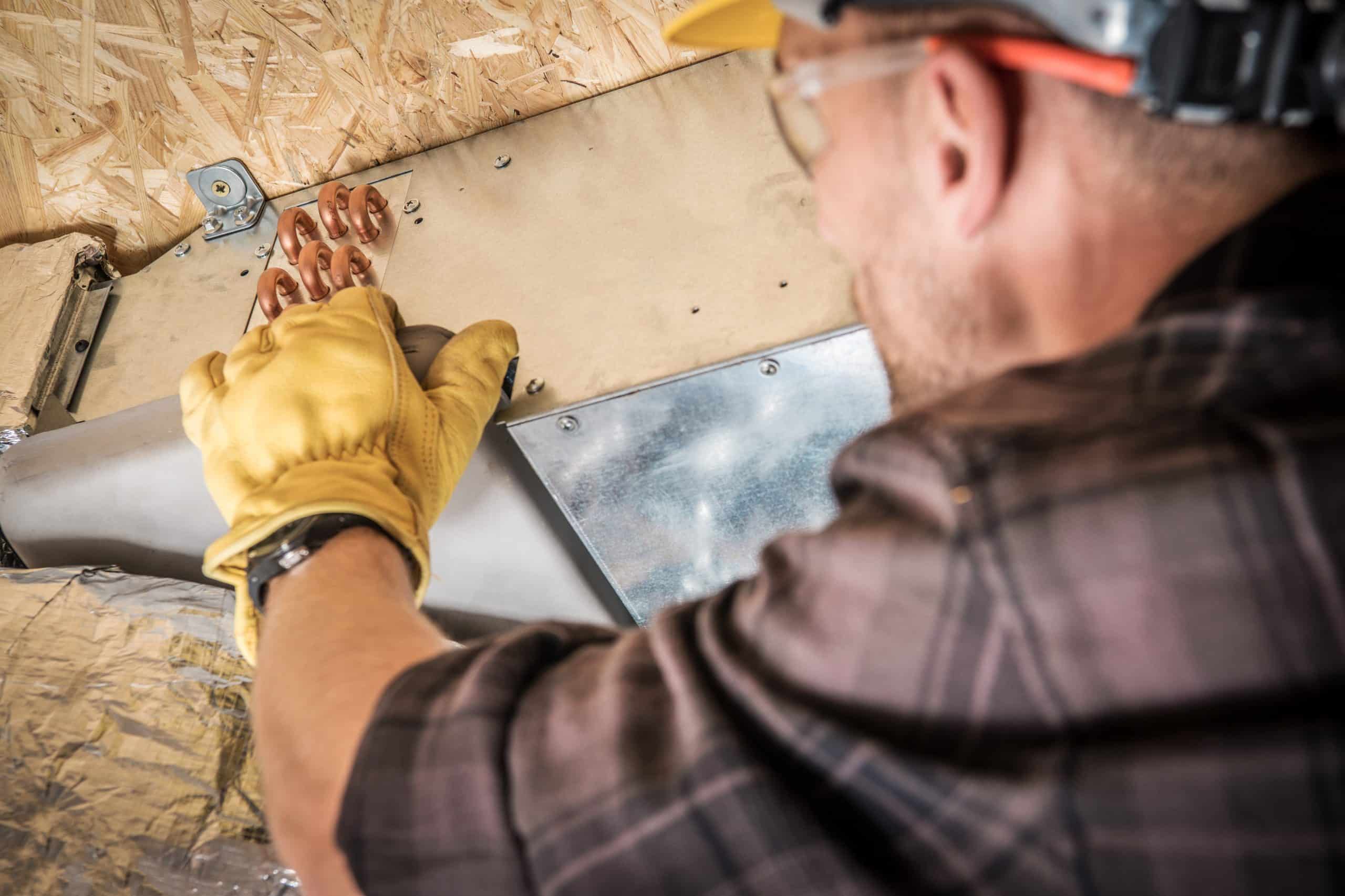
Attic duct inspection is not optional in these homes. A technician should physically get into the attic and look at the ductwork: check the insulation condition, look for disconnected joints, check flex duct for kinks, and assess whether the layout is creating any dead-end runs that starve registers. This takes 20 to 30 minutes beyond the standard service time and is worth every minute.
Airflow measurement matters too. An experienced technician can measure static pressure in the supply and return plenums to identify whether the system is getting adequate return air, which is a common problem in homes where the original return air path was not well planned during the retrofit installation.
Coil cleaning should be documented, not assumed. Ask for confirmation that the indoor evaporator coil was cleaned, not just visually inspected. Oak pollen and airborne debris accumulate on evaporator coils as well as outdoor coils, and a dirty evaporator coil reduces heat transfer efficiency in the same way a dirty filter does, just slower and less obviously.
Condensate drain inspection is particularly important in New Orleans because the humidity load on HVAC systems here is extreme. Primary and secondary condensate drains should be clear and flowing. A blocked primary drain will overflow into the secondary pan and eventually into the ceiling or wall cavity, which causes the kind of water damage that leads to mold remediation, not just HVAC service calls.
When Your Uptown Home Needs More Than Maintenance
Maintenance keeps working equipment working. It does not make undersized equipment adequate, fix a poorly designed duct system, or compensate for equipment that has simply reached the end of its service life. Knowing when to stop maintaining and start replacing is an important part of managing an older home’s HVAC costs.
Equipment age matters but it is not the only factor. A 15-year-old system that has been maintained properly and is right-sized for the house may have more useful life than a 10-year-old system that was installed by whoever gave the lowest bid and has been running outside its design parameters since day one. Look at the repair history alongside the age. If a system has needed two or more compressor-related repairs in the last three years, replacement math usually works out in the homeowner’s favor.
Entergy bills are also a useful signal. If your cooling bills have been creeping up year over year without an obvious change in usage patterns, a system efficiency degradation is likely. An older R-22 refrigerant system running on a refrigerant that is no longer manufactured and costs well over $100 per pound to recharge is an especially strong candidate for replacement. R-410A systems that are now being transitioned to R-454B (the current low-GWP replacement refrigerant) still have good parts availability and technician familiarity for another several years.
Duct replacement is sometimes the right project even when the equipment is fine. If an attic duct system is 20 or more years old, is original flex duct that has degraded, or has significant loss verified by static pressure testing, new ductwork can recover more efficiency than a new air handler installed on the old duct system.
Please note: The prices in this article are estimates only, shared to help you plan. Your actual cost depends on your property, the materials and the size of the job. For pricing on your project, call Big Easy AC Heating for a quote.
Garden District, Audubon, and Riverbend: Neighborhood-Specific Notes
The Garden District sits roughly between St. Charles Avenue and Magazine Street, from Jackson Avenue to Louisiana Avenue. It is one of the most historically significant residential neighborhoods in the country. Homes here range from modest Victorian doubles to large Greek Revival mansions. HVAC work in the Garden District often involves navigating both the age of the housing stock and the Historic District Landmarks Commission review process for any exterior work. Equipment placement matters here. A condenser unit mounted on a front gallery or visible from the street on a contributing structure will likely trigger a review. Most experienced HVAC contractors in New Orleans know to place equipment at the rear of the property and below fence line when possible.
Audubon, centered around Audubon Park and Tulane University, has a mix of larger homes from the early 1900s and some postwar construction along the park perimeter. The tree canopy here is exceptionally dense. Condenser cleaning frequency should be higher for any property with heavy oak canopy overhead, and gutter and downspout proximity to outdoor units should be checked. Debris directed from roof drainage onto condenser units during heavy rain events is a common source of coil contamination that homeowners overlook.
Riverbend and Carrollton are more varied. You find smaller shotgun houses and doubles alongside some larger properties, with construction spanning from the 1890s through the 1950s. The shotgun layout considerations above apply throughout this area. Riverbend also has some areas with older municipal sewer infrastructure that can affect drainage, which is worth knowing if you are evaluating condensate drain tie-in options during system installation.
Energy Efficiency and the Cost Reality in Uptown Homes
Entergy Louisiana rates have increased substantially over the past few years, and Uptown homes with poor duct efficiency and aging equipment feel those increases sharply. A home with uninsulated attic ductwork can lose 25 to 40 percent of its cooling capacity to heat gain before that air reaches the living space. On a $300 Entergy bill, that is $75 to $120 per month being paid for cooling that never arrived.
Duct sealing and insulation are among the highest-return investments for Uptown homeowners. They do not require replacing equipment, they can often be done in a single service visit, and the monthly savings are immediate. The Louisiana Home Energy Loan Program (HELP) through the Louisiana Housing Corporation has offered financing for energy efficiency improvements on older homes, though availability and terms change; check with your contractor about current options.
Equipment efficiency ratings matter less than duct system efficiency in most older Uptown homes. A 20 SEER system installed on a leaking, uninsulated duct system will perform worse than a 16 SEER system on a tight, insulated duct system. Fix the envelope and the ductwork first, then upgrade the equipment if the age and repair history warrant it.
Smart thermostats are a useful tool for Uptown homes but they do not solve duct or stratification problems. They help with scheduling and remote monitoring. They also give homeowners useful data: if the system is running 14 hours a day in moderate temperatures, that runtime tells you something is wrong, and it is probably not the thermostat.
Licensing, Permits, and What to Ask Before Hiring
Louisiana requires HVAC contractors to hold a Louisiana State Licensing Board for Contractors license. The license number should be verifiable on the LSLBC website. Any contractor who cannot provide a license number or who suggests skipping the permit to save money is a contractor worth walking away from. Unpermitted HVAC work in the city of New Orleans creates problems at property sale, voids most equipment warranties, and leaves the homeowner liable for any code violations discovered during inspections.
The City of New Orleans issues mechanical permits for equipment replacement and new installations. The permit process involves an inspection by the city’s mechanical inspector after the work is complete. In most cases the turnaround on mechanical permits is reasonable, and a licensed contractor who files regularly with the city will know the current processing times.
For homes in locally designated historic districts, the additional review by the Historic District Landmarks Commission applies to any alteration of the exterior of a contributing structure. Replacing equipment in the same location, on the same side of the house, with similar equipment typically does not trigger HDLC review. Adding a new penetration through a front-facing wall or placing equipment in a location visible from the public right-of-way usually does. Your contractor should be able to tell you whether HDLC review is required before work begins, not after.
Frequently Asked Questions About HVAC Maintenance in Uptown New Orleans
Why do older Uptown homes in New Orleans have higher Entergy bills?
Most pre-1960 homes in Uptown have uninsulated ductwork running through attic spaces that reach 140 to 160 degrees in summer. That heat transfers directly into the conditioned air moving through the ducts, forcing the system to run longer and work harder. Add high ceilings that allow cold air to sink while heat pools near the ceiling, and a single system is fighting the building on two fronts. Proper duct sealing, insulation, and in some cases zoning can cut monthly Entergy costs significantly.
How often should HVAC filters be changed in Uptown New Orleans?
Most manufacturers suggest every 60 to 90 days, but that schedule assumes average air quality. In Uptown, live oak trees drop pollen from February through April and shed debris nearly year-round. Homeowners near Audubon Park or along St. Charles Avenue often need to change standard 1-inch filters every 30 days during peak pollen season. A MERV 11 or MERV 13 filter catches more particulate but restricts airflow more, so the filter-to-system match matters. Ask your technician what rating your specific air handler can handle without straining the blower motor.
Can a shotgun house in Uptown support central air conditioning?
Yes, but the narrow linear layout creates airflow challenges that a standard single-zone system often cannot overcome. The front rooms near the supply plenum stay cold while the rear rooms stay warm. Solutions include adding a second return, zoning the existing ductwork with dampers, or installing a ductless mini-split in the rear section. Historic preservation rules in some Uptown districts restrict where you can cut through exterior walls or run visible lineset, so the approach varies by property. A licensed technician who has worked in shotgun houses before will know the constraints before showing up.
Do HVAC contractors need a permit for work in Uptown New Orleans?
The City of New Orleans requires a mechanical permit for equipment replacement, new system installation, and significant ductwork work. Contractors must hold a Louisiana State Licensing Board for Contractors (LSLBC) license. Work in historic districts, including portions of the Garden District and Audubon neighborhood, may also require approval from the Historic District Landmarks Commission if the installation affects the exterior of a contributing structure. Always ask your contractor to pull the permit before work begins, not after.
What is the best HVAC solution for a Garden District home with cast iron radiators?
Homes with cast iron radiator systems were built for hot water or steam heat, not forced air. Adding central air to these properties typically means either running ductwork through interior walls and closets or installing a multi-zone ductless system that avoids ductwork entirely. Ductless mini-splits work well in these homes because they require only a small lineset penetration through the wall and do not disturb the historic interior structure. Cooling capacity per zone is sized to the room, which solves the stratification problem at the same time.
How does Uptown’s tree canopy affect outdoor HVAC equipment?
Live oak debris, Spanish moss, and airborne seed pods clog condenser coil fins faster in Uptown than in newer suburban developments. A blocked condenser cannot release heat efficiently, which raises head pressure and shortens compressor life. Plan on cleaning the outdoor unit coils at least once a year, and more often if the unit sits under or near a large oak. Keep at least 18 inches of clearance around the unit and trim any vegetation pressing against the sides. Shade from trees does reduce the heat load on the refrigerant, but that benefit disappears the moment debris restricts airflow.
What zip codes in Uptown New Orleans does Big Easy AC Heating serve?
Big Easy AC Heating serves Uptown New Orleans zip codes 70115, 70118, and 70130, covering the Garden District, Audubon, Riverbend, and Carrollton neighborhoods. Service extends to Metairie, Kenner, Gretna, Westwego, Harahan, River Ridge, and Northshore communities including Slidell, Covington, and Mandeville.
Schedule Your Uptown Home HVAC Service
Older homes in Uptown New Orleans deserve a maintenance approach built around their actual conditions, not a one-size-fits-all checklist. If your system is working harder than it should, if certain rooms never reach temperature, or if you are trying to figure out whether repair or replacement makes more sense for a pre-1960 home, call 504-608-4636 to schedule a service visit. Big Easy AC Heating serves the Garden District, Audubon, Riverbend, Carrollton, and surrounding Uptown neighborhoods, along with Metairie, Kenner, Gretna, Westwego, Harahan, River Ridge, Slidell, Covington, and Mandeville.
Our address is 4323 Division Street, Suite 211, Metairie, LA 70002. We hold an active LSLBC license and pull all required permits. When you call, let us know your home’s age and construction type. It makes the dispatch conversation more useful and means the technician who shows up has the right background for your specific situation.