

Quick Summary
The cost of fixing a heat pump in New Orleans depends on which component failed, not on the size of the unit. Capacitors, contactors and thermostats sit at the cheap end, blower motors and control boards in the middle, and compressors and refrigerant leaks at the expensive end where repair often stops making sense. Big Easy AC Heating diagnoses the fault first and quotes against that finding, because a heat pump here runs in both heating and cooling mode and accumulates wear faster than the same unit would in a milder climate.
Last Updated: September 2026
What this guide covers
Heat pump repair costs in New Orleans are set by the failed part and the labour to reach it. A worn capacitor is a small job. A failed compressor is a different conversation, one that usually turns into a replacement discussion rather than a repair quote. Anyone quoting a price before diagnosing the fault is guessing, and the guess is rarely in your favour. If replacement is on the table, read about the benefits of a heat pump system for your home.
There is a local factor worth knowing before you call anyone. A heat pump in South Louisiana works in both directions across a long season, so it logs far more running hours than the same model would in a temperate state. Big Easy AC Heating sees the consequences of that in the failure pattern, with components that wear by runtime failing earlier here than their nominal service life suggests.
What Actually Determines the Repair Bill?
Four things set the price: which component failed, whether the part is still manufactured, how much labour is needed to reach it, and whether refrigerant work is involved. Refrigerant moves a quote the most, because it brings certification, recovery equipment and leak testing into the job.
The ranges below are national figures published for 2026 by the cost data services Angi and HomeAdvisor, covering parts and labour together. Treat them as a sighting shot rather than a quote, because the final number turns on access, refrigerant type and whether the part is still manufactured. A diagnostic visit itself commonly runs $100 to $250 before any repair is authorised, and that fee is what buys you a figure grounded in your own equipment.
| Failure | Typical published range | What it usually means |
|---|---|---|
| Capacitor or contactor | $150 to $400 | Routine wear part, quick fix, system returns to normal |
| Thermostat or sensor | $115 to $265 | Often a control fault rather than an equipment fault |
| Defrost control or reversing valve | $325 to $625 | Heating mode specific, worth fixing on a younger unit |
| Blower motor | $300 to $900 | Airflow failure, frequently preceded by a dirty filter |
| Refrigerant leak | $250 to $1,600 | Find and repair the leak, never just recharge |
| Compressor | $750 to $4,500 | Usually triggers the replace conversation on an older system |
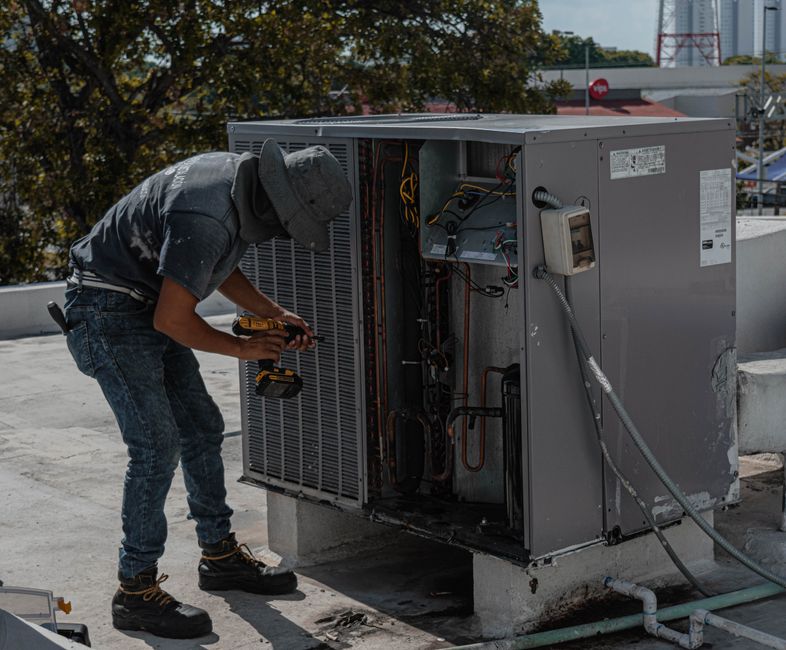
The reversing valve is the one homeowners have not heard of. It is the part that lets a heat pump run in both directions, so it has no equivalent in a plain air conditioner, and a fault in it produces the confusing symptom of a system that cools correctly but will not heat.
Age changes which of these is likely, which is why a technician asks how old the unit is before quoting anything. On equipment still in its first few years a fault is usually electrical, a capacitor or a control board, and the repair stays proportionate to the value of the system. Past the ten year mark the failures move toward the sealed refrigerant circuit, where parts cost more and the labour takes longer. Knowing which half of that range your unit sits in tells you roughly what to expect before anyone opens the casing.
Please note: The prices in this article are estimates only, shared to help you plan. Your actual cost depends on your property, the materials and the size of the job. For pricing on your project, call Big Easy AC Heating for a quote.
Why Is Recharging Refrigerant Not a Repair?
Because refrigerant is not consumed. A sealed system does not use it up, so a unit that is low on charge has a leak somewhere. Adding refrigerant without finding that leak buys a few months and sends the same money out through the same hole, then asks you to pay again.
There is a supply dimension too. The American Innovation and Manufacturing Act phases down the refrigerant most older units were built around, and newly manufactured residential equipment has moved to lower global warming potential alternatives such as R-454B. Servicing an older R-410A system remains legal and possible, but the availability and cost picture for it is drifting, which is worth weighing on a unit already approaching the replacement conversation. Handling any refrigerant requires EPA Section 608 certification, so this is not a category where an unlicensed cheap quote is a saving.
A proper leak search takes time, which is why some quotes skip it. Nitrogen pressure testing, electronic detection and dye all cost labour hours before a single part is replaced. Paying for that search once is almost always cheaper than paying for refrigerant twice, and it is the difference between a repair that holds and one that brings the same technician back next season.
When Does Repairing a Heat Pump Stop Making Sense?
When the repair cost multiplied by the unit’s age in years clears roughly $5,000, or when the compressor has failed on a system past its first decade. Those two tests catch most cases. Repeated faults within a single season are the third signal, because a pattern of failures rarely resolves itself with one more part.
That first test is the industry shorthand, and it is a starting point rather than a verdict. We set out where it holds and where it misleads people locally in our piece on the $5,000 rule applied to New Orleans homes. A broader look at what the common faults cost across system types sits in our guide to common HVAC repair problems and next steps, and the benefits side of the equipment itself is covered on our heat pump page.
What Can You Check Before Calling for Repair?
Check the simple things first, because a meaningful share of call-outs turn out to be a tripped breaker, a clogged filter or a thermostat set wrong. Five minutes of checking can save a diagnostic fee, and none of it requires opening the equipment or touching anything electrical inside the unit.
- Thermostat mode and setpoint, since heat pumps have separate heating and cooling modes that are easy to leave wrong after a season change.
- The breaker for both the indoor air handler and the outdoor unit, which are usually on separate circuits.
- The air filter, because a blocked filter causes airflow faults that imitate a failing system.
- The outdoor unit for debris, vegetation or anything blocking airflow across the coil.
- The condensate drain, since a full pan can trigger a safety switch that shuts the system down deliberately.
If all five check out, the fault is inside the equipment and needs a technician. Note what the system does and does not do, because “cools but will not heat” and “runs but does not cool” point at completely different components and save diagnostic time. Keeping up with routine maintenance is what prevents most of the medium cost failures above, and our year-round service schedule sets out when each task is due.
Frequently Asked Questions
Why does my heat pump cool fine but not heat?
That pattern usually points to the reversing valve or the defrost control, the components that only operate in heating mode. A system that cools normally has a working compressor and adequate charge, which narrows the fault considerably.
Is it cheaper to repair a heat pump than an air conditioner?
Shared components cost about the same, but heat pumps have extra parts an air conditioner does not have, including the reversing valve and defrost control. That adds a few possible failures rather than making every repair more expensive.
How long should a heat pump last in New Orleans?
Less than the national figures suggest, because equipment here runs in both modes across a long season and accumulates runtime faster. Maintenance history moves that number more than brand choice does.
Should I just add refrigerant to keep it going?
No. Refrigerant is not consumed, so low charge means a leak, and topping it up without repairing the leak means paying repeatedly for the same loss.
Does a failed compressor always mean replacement?
Not always, but usually on an older unit. On a system still inside its parts warranty the calculation can change substantially, so check warranty status before approving anything.
Who repairs heat pumps in the New Orleans area?
Big Easy AC Heating diagnoses and repairs heat pumps across New Orleans, Metairie, Kenner, Slidell and the surrounding parishes, with EPA certified technicians for any work involving refrigerant.
If your heat pump is running badly, get the fault identified before you agree to any figure. Call Big Easy AC Heating at 504-608-4636 or arrange a diagnostic visit, and you will get a written quote against a named component rather than a price pulled from the air.