

New Orleans summers are not a test run. From May through October, and often well into November, temperatures climb past 95°F while humidity pushes the heat index above 105°F on a regular basis. For families across Big Easy AC Heating‘s service area, that means your air conditioner is not a seasonal appliance, it is the central system your home depends on 10 to 12 months a year. That kind of relentless operation piles wear onto components faster than anywhere in the northern half of the country. The good news is that an AC system rarely fails without warning. There are clear signals, and catching them early keeps a repair call from turning into an emergency replacement in the middle of August.
Below are seven signs that your HVAC system is working harder than it should, along with what each sign actually means for a South Louisiana home.
1. Unusual Noises Coming From the Unit
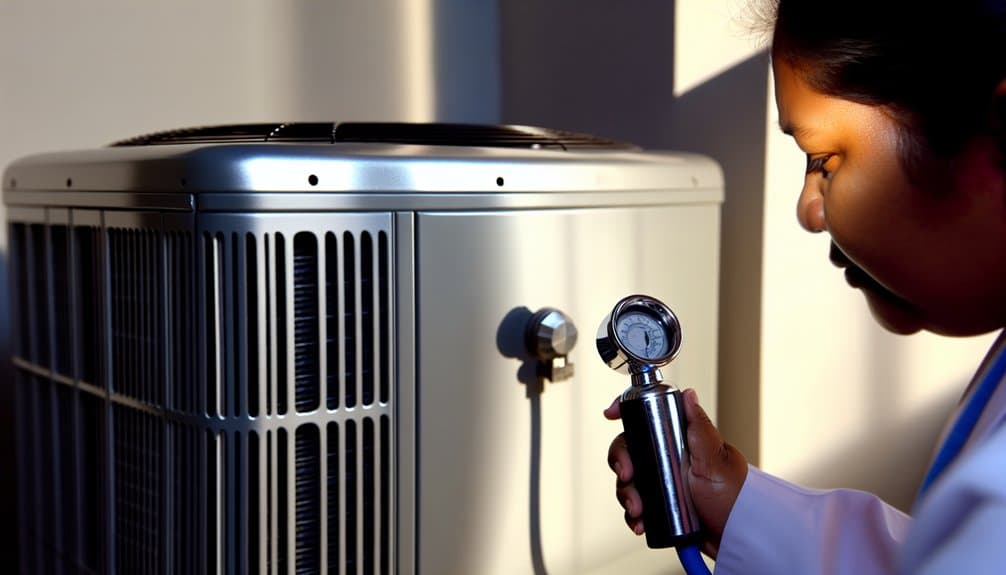 A properly functioning air conditioner runs with a steady, low hum. Anything outside that baseline is worth paying attention to. In NOLA’s climate, mechanical wear accelerates because systems simply run more hours per year than they would in, say, St. Louis or Chicago. Bearings, belts, and capacitors age faster here.
Banging or clanking usually points to a loose or broken component inside the compressor or blower assembly. This is not a noise to wait out. A piston pin or connecting rod moving around inside the compressor will cause cascading damage if the system keeps running.
Squealing is a classic blower motor symptom. Worn bearings or a slipping belt restrict airflow and put extra load on the motor. Left alone, the motor eventually seizes.
Rattling sounds often come from loose screws or ductwork connections. In older New Orleans homes, ductwork runs through attic spaces that hit 140°F or higher in summer. Metal expands and contracts constantly in those conditions, and fasteners work themselves loose over time.
Persistent humming with no other symptoms can point to a failing capacitor. Capacitors are inexpensive parts, but a bad one keeps the compressor from starting properly, causing the motor to draw excess current and shorten its own life.
If you hear anything beyond the normal run cycle hum, schedule a diagnostic before the noise turns into a breakdown.
2. Entergy Bills Climbing Without a Clear Reason
Everyone in New Orleans watches their Entergy bill during summer. In a well-functioning system, the bill should be relatively predictable based on how hot the month was. A sudden spike that does not match the weather is one of the clearest early-warning signs that your AC is struggling.
An inefficient system has to run longer cycles to pull the indoor temperature down to the thermostat setpoint. Longer run time equals more kilowatt-hours, which shows up directly on your Entergy statement.
Common culprits behind a climbing bill include clogged air filters, refrigerant leaks, duct leaks losing conditioned air into the attic, and aging equipment that no longer meets its rated efficiency. A system running at 60 percent of its original capacity has to work nearly twice as long to do the same job.
It is also worth noting that Entergy New Orleans periodically offers rebates for qualifying high-efficiency replacements. If your system is aging and your bills are rising, checking current Entergy rebate programs before deciding on repair versus replacement could save you several hundred dollars on a new installation.
Regular maintenance, including filter swaps every 30 to 60 days in South Louisiana (more frequently if you have pets or do construction work), duct inspections, and annual refrigerant checks, is the most reliable way to keep your Entergy bill in a predictable range.
3. Rooms That Will Not Cool Down
 If certain rooms in your Metairie or Kenner home feel warm no matter how long the AC runs, the system is telling you something specific. Ineffective cooling in one zone typically points to one of a handful of causes.
| Cause | What You Notice | Typical Fix |
|---|---|---|
| Low refrigerant (leak) | Warm air from vents, ice on refrigerant lines | Locate and seal leak, recharge refrigerant |
| Dirty evaporator or condenser coils | AC runs constantly, never reaches setpoint | Professional coil cleaning |
| Clogged air filter | Reduced airflow, uneven temperatures | Replace filter immediately |
| Failing compressor | System runs but cannot reach setpoint | Compressor inspection, repair or replace |
| Duct leaks into attic | Specific rooms always warmer than others | Duct sealing and insulation check |
Refrigerant leaks deserve special attention in South Louisiana. Ice on your refrigerant lines outdoors or near the air handler is a tell-tale sign. Aging copper refrigerant lines degrade faster in extreme heat, and post-Katrina systems that are now 15 to 20 years old are especially prone to small leaks that slowly choke the system.
The current refrigerant landscape adds another layer. R-22 (Freon) has been phased out under federal law, and R-410A is being phased down under the AIM Act. If your system still uses R-22, repair costs are high because the refrigerant itself is scarce and expensive. Replacement with a modern R-410A or R-32 system is almost always the smarter financial move at that point.
New installations in South Louisiana must meet at least 15 SEER2 under Climate Zone 2 minimums. A modern 16 or 18 SEER2 unit uses significantly less electricity to deliver the same or better cooling than an older 10 SEER system.
4. Short Cycling: The System Turns On and Off Too Often
Short cycling is one of the more damaging HVAC behaviors, and it is especially common in greater New Orleans for a specific historical reason. During the post-Katrina rebuilding period, many homes received replacement HVAC systems that were oversized for their actual square footage. Contractors under pressure to move fast sometimes skipped proper Manual J load calculations and simply installed larger units.
An oversized unit cools the space fast, hits the thermostat setpoint, shuts off, then restarts minutes later as temperatures rebound. This on-off-on-off pattern is hard on the compressor, which draws the highest electrical current at startup. Frequent startups shorten compressor life dramatically.
Short cycling also prevents the system from running long enough to dehumidify. In a climate with average relative humidity above 73 percent, that is a serious problem. Your home feels sticky and uncomfortable even when the thermostat reads 74°F, because the AC removed the sensible heat but not the latent load.
Outside of sizing, short cycling can also result from a dirty air filter blocking airflow, a malfunctioning thermostat reading temperatures incorrectly, or a low refrigerant charge. A proper diagnosis narrows it down quickly.
5. Weak or Inconsistent Airflow
 Hold your hand near a supply vent while the system runs. You should feel a consistent, strong flow of cool air. If airflow feels weak, intermittent, or barely noticeable, the system is restricted somewhere in the chain.
The most common culprit is a clogged filter. In the New Orleans area, outdoor air carries higher particulate loads during certain seasons, and homes near construction projects or the river industrial corridor can clog a filter in three weeks rather than the typical 30 to 60 days.
Duct leaks into the attic are a significant problem in South Louisiana specifically. Attic temps routinely exceed 140°F in summer. When conditioned air at 55°F leaks out of a duct seam into that environment, the system loses both cooling capacity and efficiency simultaneously. You pay to cool air that never reaches you.
Blower motor issues are another common cause. The blower motor circulates air through the entire system. A motor running at reduced speed due to a failing capacitor or worn windings moves less air, which reduces heat transfer at the coil and weakens airflow at every vent.
Poor airflow is not just a comfort issue. A restricted system runs hotter internally, stresses the compressor, and can cause the evaporator coil to freeze, which shuts the system down entirely.
6. Musty Smells and Humidity You Can Feel Indoors
New Orleans has a reputation for humidity, and most locals have learned to tolerate some of it outdoors. Inside your home is a different story. If you walk in from outside and your home feels only marginally less humid, your AC system is not controlling moisture the way it should.
A functioning AC removes both sensible heat (temperature) and latent heat (moisture) from indoor air. In South Louisiana, the latent load is enormous. Your system works to dehumidify simultaneously with cooling, which is a heavier burden than what systems in drier climates face.
Musty or moldy odors from the vents are almost always a sign of microbial growth on the evaporator coil or inside the ductwork. High humidity plus a cold coil surface is an ideal environment for mold. This is not just a comfort problem. Mold spores circulate through the air in your home and affect air quality, particularly for anyone with respiratory conditions.
Condensate line overflow is another NOLA-specific issue to watch for. The condensate drain removes moisture the coil pulls from the air. In South Louisiana, that drain handles a significant volume of water during peak summer. A clogged condensate line triggers a float switch that shuts the system down. If your AC stops unexpectedly on a hot day, a condensate overflow trip is one of the first things to check.
Leaky ductwork can also pull humid outdoor air into the system through return leaks. Instead of conditioning only indoor air, the system fights a constant influx of 85°F, 90 percent relative humidity outside air.
Persistent indoor humidity above 60 percent means your system needs attention. Options range from a thorough coil cleaning and condensate flush to a whole-home dehumidifier added to the system.
7. Thermostat Problems and Temperature Inconsistency
Your thermostat is the control layer between what you want and what the system delivers. A thermostat reading temperatures incorrectly will cause the system to behave erratically, and that erratic behavior looks like a mechanical failure when the real issue is a sensor or calibration problem.
| Symptom | Likely Cause | Next Step |
|---|---|---|
| System won’t start | Dead batteries, tripped breaker, or failed capacitor | Check power supply; call tech if power is confirmed |
| Rooms vary more than 3-4°F | Thermostat placement issue or duct imbalance | Zoning inspection or thermostat relocation |
| System cycles every few minutes | Thermostat sensor malfunction or oversized unit | Sensor calibration or Manual J re-evaluation |
| Display blank or unresponsive | Battery failure or wiring fault | Replace batteries; inspect wiring connections |
| Set to 72°F but home feels 78°F | Sensor drift, coil issue, or refrigerant loss | Full system diagnostic |
Smart thermostats can help by giving you precise data on how long the system runs per cycle, historical temperature logs, and alerts when runtime extends beyond normal. That data makes diagnosing problems much easier for a technician. If you are still using an analog or older digital thermostat, upgrading to a programmable or Wi-Fi model is a low-cost change that pays back in better control and visibility.
Placement matters too. A thermostat near a window that gets direct afternoon sun, near a kitchen heat source, or in a hallway with poor airflow will give inaccurate readings and cause the system to behave as though conditions are different from what they actually are throughout the rest of the home.
What Happens If You Ignore These Signs?
None of these seven signs resolve on their own. An AC system under stress continues to deteriorate. Refrigerant leaks grow larger. Coils that are slightly dirty become heavily fouled. A compressor drawing high startup current from short cycling fails eventually. The progression from “needs a tune-up” to “needs full replacement” is usually a matter of months, not years, when warning signs go unaddressed.
In New Orleans, the timing of a breakdown matters enormously. A system that fails in early June during a heat index forecast of 108°F puts a household in a genuinely dangerous situation. Demand for HVAC service spikes sharply in summer, which means longer wait times and less scheduling flexibility. Catching a problem in April or November, when demand is lower, means faster service, more technician availability, and better ability to source parts if needed.
Louisiana requires HVAC technicians to hold an LSLBC (Louisiana State Licensing Board for Contractors) license for all HVAC repairs and replacements. Always confirm your contractor is properly licensed before work begins. Licensed contractors are accountable to state standards, carry required insurance, and are qualified to handle refrigerant under EPA 608 certification.
When Repair Makes Sense Versus Replacement
This is the question most homeowners reach eventually. A useful rule of thumb: multiply the repair cost by the system’s age in years. If that number exceeds 50 percent of a new system’s installed cost, replacement is usually the better investment.
Several additional factors push toward replacement in South Louisiana specifically. If your system uses R-22 refrigerant, replacement costs make repairs impractical. If the system is older than 12 to 15 years, it predates current SEER2 efficiency standards, meaning you are paying significantly more in Entergy bills each year than you would with a modern unit.
The 15 SEER2 minimum for new South Louisiana installations is worth noting. A system installed today at 15 SEER2 is meaningfully more efficient than a 12 SEER unit from 2010, even before factoring in any degradation from years of continuous NOLA-climate operation.
Frequently Asked Questions
How often should New Orleans homeowners schedule AC maintenance?
Twice a year is the baseline recommendation, with the pre-summer visit being the most important. Because South Louisiana systems run 10 to 12 months annually, many HVAC professionals in the area recommend a third visit in the fall to catch wear accumulated over the heavy summer period. At minimum, replace your filter every 30 to 60 days during peak cooling months.
Why does my AC keep tripping the condensate overflow sensor?
A condensate line overflow trip is one of the most common HVAC service calls in New Orleans. The primary cause is a clogged condensate drain line, which typically happens from algae growth inside the PVC drain. In South Louisiana’s humidity, condensate lines handle large volumes of water daily and algae builds quickly. A technician can flush and treat the line. Installing an auto-flush system or annual line maintenance prevents most recurrences.
Is ice on my outdoor refrigerant lines a sign of a refrigerant leak?
Ice on the refrigerant lines, whether at the outdoor unit or near the air handler, almost always points to a refrigerant problem. A low charge reduces the pressure inside the lines, causing the refrigerant to absorb heat at the wrong rate and freeze the moisture on the coil or line surface. A refrigerant leak should be located and repaired before the refrigerant is recharged. Simply adding refrigerant without finding the leak is a short-term fix that does not address the underlying problem.
My system runs constantly but the house won’t get below 78 degrees. What is wrong?
A system that runs continuously without reaching setpoint is a classic sign of capacity loss. In a New Orleans home, the most common causes are a refrigerant leak, a fouled evaporator coil preventing proper heat transfer, duct leaks losing conditioned air to the attic, or a failing compressor. On a day with a 105°F heat index, even a healthy system works at its maximum. A system with any of these problems simply cannot keep up. A full diagnostic will identify which component is the limiting factor.
Should I replace my system if it still uses R-22 refrigerant?
R-22 was phased out of production in the United States as of 2020. Supply is now limited to reclaimed or stockpiled refrigerant, which has driven prices significantly higher. If your R-22 system develops a leak requiring more than a small charge, the refrigerant cost alone can make repair economically unattractive compared to replacing the system with a modern R-410A or R-454B unit. Most HVAC professionals in the Metairie and New Orleans area will give you a side-by-side cost comparison before recommending either path.
Why is my home humid even when the AC is running?
In South Louisiana, your AC handles both cooling and dehumidification simultaneously. If the system is oversized, it cools the space quickly and shuts off before completing the dehumidification cycle. The result is a home at 72°F that still feels sticky. An undersized system running constantly also struggles because it never removes enough moisture volume. Duct leaks pulling in outdoor air and a dirty evaporator coil are additional contributors. A humidity reading above 60 percent indoors while the system is running warrants a professional evaluation.
What HVAC contractor license is required in Louisiana?
Louisiana requires HVAC contractors to be licensed through the Louisiana State Licensing Board for Contractors (LSLBC). The license covers both HVAC installation and repair work. Technicians handling refrigerants must also hold EPA Section 608 certification. Before hiring any contractor in the New Orleans area, confirm their LSLBC license number and verify it is current on the LSLBC online lookup tool.
Get a Diagnostic Before Small Problems Become Big Ones
If any of the seven signs above sound familiar, the right move is a professional diagnostic rather than waiting to see if the problem clears on its own. In South Louisiana’s operating environment, HVAC problems do not self-correct. They compound.
Big Easy AC Heating serves New Orleans, Metairie, Kenner, Slidell, Covington, and Mandeville. Our technicians are LSLBC licensed and EPA 608 certified, equipped to handle everything from refrigerant work and coil cleaning to full system replacement with current SEER2-compliant equipment.
Call us at 504-608-4636 to schedule a diagnostic. Catching a problem in its early stages almost always costs less than dealing with the fallout of a full system failure in the middle of a New Orleans summer.