

Quick Summary
The $5,000 rule is an HVAC industry guideline, not a law and not a New Orleans city code. You multiply the age of your system in years by the cost of the repair quote. If the result is above $5,000, replacement is usually the better financial decision, and if it falls below, repairing is normally worth it. Big Easy AC Heating applies this test alongside refrigerant type, efficiency rating, and local permit requirements for homeowners across New Orleans, Metairie, Kenner, and the surrounding parishes, because the raw formula alone misses several factors that matter in South Louisiana.
Last Updated: September 2026
What this guide covers
The $5,000 rule gives New Orleans homeowners a fast way to decide whether to repair or replace a furnace, heat pump, or air conditioner: multiply the equipment age by the repair estimate, then compare the total to $5,000. A nine year old furnace with a $600 repair scores 5,400, which points toward replacement. A six year old system with the same repair scores 3,600, which points toward a fix. The formula is genuinely useful as a first filter, and it is also older than the equipment standards, refrigerant rules, and climate loads that decide the answer in this market today.
That gap matters here more than almost anywhere else. Big Easy AC Heating works on systems that run close to year round, in a climate where attic temperatures regularly climb past 140 degrees in midsummer and humidity stays high enough to keep equipment cycling even on mild winter days. A system here accumulates runtime hours faster than the same model in a northern state, so the age number in the formula carries more wear than the calendar suggests.
How Does the $5,000 Rule Actually Work?
Multiply the system age in years by the repair quote in dollars, then compare the product to $5,000. Above that line, replacement usually wins on total cost of ownership. Below it, repair is the better spend. The rule stops homeowners pouring money into equipment already near the end of its life.
Worked through real numbers, the rule sorts most situations quickly:
| System age | Repair quote | Score | What the rule suggests |
|---|---|---|---|
| 4 years | $450 | 1,800 | Repair, comfortably |
| 7 years | $600 | 4,200 | Repair, but start planning |
| 9 years | $600 | 5,400 | Replacement worth pricing |
| 12 years | $500 | 6,000 | Replacement usually wins |
| 15 years | $350 | 5,250 | Replacement, even on a small repair |
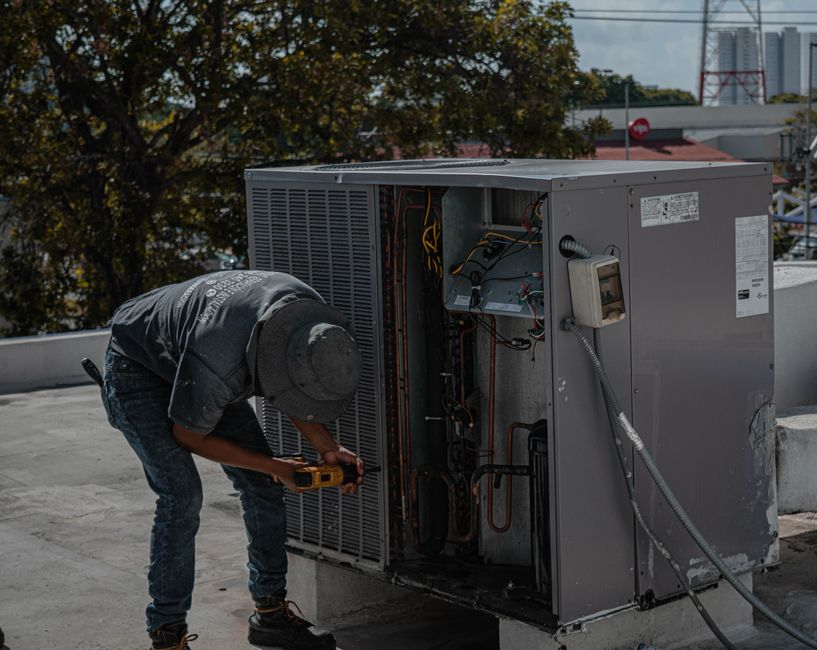
Notice the last row. A modest $350 repair still tips an old system into replace territory, because the rule is weighted toward age rather than the size of any single invoice. That is deliberate. The expensive outcome is rarely one repair, it is four repairs across three years on equipment that fails anyway.
The arithmetic also assumes the repair quote itself is sound. A price offered before anything has been measured is an estimate of an unknown, and it is the one number in the formula you can reasonably challenge. Ask which component actually failed, whether that was measured or inferred from the symptoms, and what the technician expects to fail next on a system of that age. A second opinion costs a diagnostic fee and regularly moves the score by more than the rule ever does.
Is the $5,000 Rule Part of New Orleans City Code?
No. There is no $5,000 threshold in New Orleans code governing whether you repair or replace HVAC equipment. The figure is an industry rule of thumb that circulates nationally. Homeowners looking for a local version are usually thinking of permit rules, which work differently and apply whatever the repair costs.
What is genuinely local is the permit itself. The City of New Orleans Department of Safety and Permits requires a mechanical permit for heating, ventilating, and air conditioning work, and that requirement is not waived because a job is small or inexpensive. The city calculates the fee from the scope of the work, including the type of equipment involved and the number of connections. Applications run through the city online permitting portal. Separate permits cover electrical and plumbing work where a project touches those trades.
The practical consequence is simple. A licensed contractor pulls the permit and schedules the inspection as part of the job. An unlicensed handyman quoting a suspiciously low number usually does not, which is how homeowners end up with uninspected work that surfaces later during a home sale.
Why Does the $5,000 Rule Mislead New Orleans Homeowners?
The rule treats every year of age as equal, and in South Louisiana they are not. Equipment here runs through a cooling season covering most of the calendar, so a ten year old system in New Orleans has often logged the runtime of a much older unit elsewhere. The formula underweights that wear.
Several local factors push the real answer away from the raw score:
- Runtime load. Near year round cooling demand means compressors and blower motors reach their duty limits earlier than the nominal service life implies.
- Humidity. Persistent moisture drives coil corrosion and drain line problems that rarely appear as a single dramatic failure, but steadily raise the annual repair total.
- Attic placement. Air handlers installed in unconditioned attics work against radiant heat loads that simply do not exist in northern installations.
- Refrigerant transition. Systems built around R-410A are affected by the phasedown under the American Innovation and Manufacturing Act, and the industry has moved toward lower global warming potential refrigerants such as R-454B. That changes the long term parts and service picture for older equipment.
- Efficiency floor. The Department of Energy 2023 update set a 14.3 SEER2 minimum for split systems under 45,000 BTU per hour in the Southeast region, equivalent to the old 15 SEER rating, so any replacement system is held to a standard much of the installed base predates.
None of this makes the rule useless. It makes it a starting point rather than a verdict. Our technicians run the arithmetic and then check the things the arithmetic cannot see, which is why two systems with identical scores sometimes get opposite recommendations.
When Should You Repair a Furnace Instead of Replacing It?
Repair the furnace when the system is under roughly eight years old, the fault is a single failed component rather than a pattern, the heat exchanger is sound, and the unit has been maintained. Replacement becomes the better call once repairs start repeating or the heat exchanger is compromised.
Under those conditions a repair buys real remaining life. Certain faults change the calculation immediately, whatever the formula says. A cracked heat exchanger is a safety matter rather than an economic one, and it ends the repair conversation. Repeated ignition or control board failures on the same unit within a single season usually signal a system that will keep failing. Refrigerant leaks on older equipment are a different judgement again, because recharging equipment that is losing charge rarely pays back.
Straightforward furnace repair on a reasonably young unit is usually the right answer, and our wider heating service covers diagnostics across furnaces, heat pumps, and hybrid setups so the recommendation rests on the whole system rather than the part that failed. If you want the cost side laid out first, our guide to common HVAC repair problems and what they cost locally covers the usual range.
How Do You Lower the Score Before It Forces a Decision?
You cannot change the system age, so the only variable you control is the repair column. Systems that get annual professional attention accumulate fewer and smaller faults, which keeps the multiplied score below the replacement threshold for longer. Maintenance is the cheapest way to delay a five figure decision.
- Book a professional inspection before each heating season, so small faults are found while they are still small.
- Change filters on schedule, because restricted airflow sits behind a large share of blower and coil failures in this climate.
- Keep condensate drains clear, since blocked lines cause water damage that is expensive and entirely preventable.
- Track every repair invoice, because the pattern across three years tells you more than any single quote.
- Get replacement pricing before the system fails, not during the first cold snap when everyone else is calling.
Routine AC and heating maintenance is what keeps that repair column small. Our pre-winter maintenance checklist sets out what a seasonal visit should actually include, and homeowners weighing a full system change will find the timing signals in our piece on knowing when replacement is the right move. For a broader orientation, the complete homeowner overview of heating and cooling in New Orleans pulls the whole picture together.
Frequently Asked Questions
Does the $5,000 rule apply to heat pumps as well as furnaces?
Yes, the same age multiplied by repair cost formula is applied to heat pumps, air conditioners, and furnaces. Heat pumps in this region run in both heating and cooling mode, so their accumulated runtime is usually higher than a furnace of the same age.
Is $5,000 still the right threshold in 2026?
The threshold is widely treated as dated, because equipment and installation costs have risen substantially since the rule became popular. Treat the score as a signal to go and get replacement pricing rather than as a fixed cutoff.
Do I need a permit to replace a furnace in New Orleans?
Yes. The City of New Orleans requires a mechanical permit for heating and air conditioning work, and a licensed contractor pulls it as part of the job. The requirement applies regardless of what the project costs.
How old is too old for a furnace in New Orleans?
Most furnaces reach the point where replacement is worth pricing somewhere past the twelve year mark, though local runtime and maintenance history move that number in both directions. A well maintained unit can run considerably longer.
What if my repair quote is high but the system is almost new?
A high quote on young equipment usually means a major component failure that may be covered by the manufacturer parts warranty. Check warranty status before approving the work, because it can remove most of the cost from the calculation.
Who can I ask to run the numbers on my own system?
Big Easy AC Heating provides diagnostics and written repair estimates across New Orleans, Metairie, Kenner, Slidell, and the surrounding parishes, and technicians will walk through the repair against replacement comparison for your specific unit.
If a repair quote has you weighing the $5,000 test against a full replacement, get the system properly diagnosed before committing either way. Call Big Easy AC Heating at 504-608-4636 or request a visit online, and a technician will assess the unit, confirm what the repair genuinely buys you, and handle permitting if replacement turns out to be the better decision.